

Greenwave Circularity secures US$31.5M for Odisha PET recycling plant
Built on a closed-loop model returning used bottles to raw material, the Odisha plant will produce food-grade resin and preforms, addressing India’s shortfall in food-contact-compliant recycled PET.
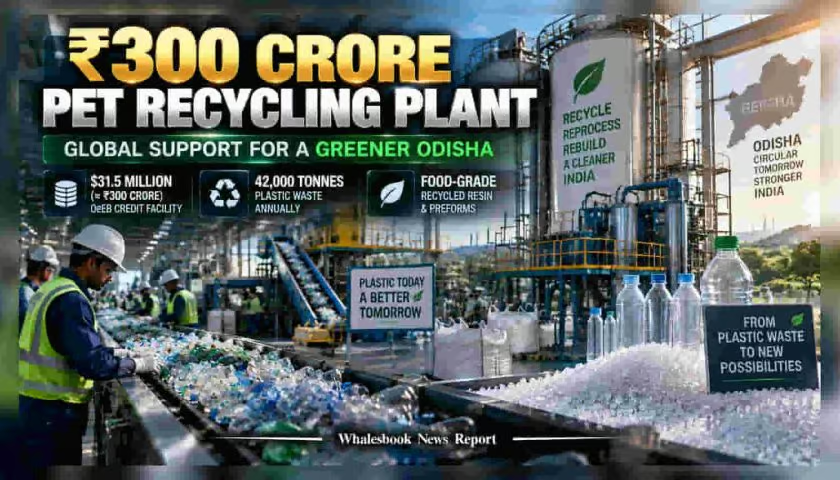
INDIA – Greenwave Circularity has secured a US$31.5 million loan from Austria’s Development Bank to build a PET recycling facility in Odisha, designed to convert 42,000 tonnes of plastic waste annually into food-grade resin.
The credit facility comes from OeEB, the Development Bank of Austria, with a 60% guarantee from the European Union’s European Fund for Sustainable Development Plus and the Austrian Ministry of Finance.
The risk-sharing arrangement reflects sustained international interest in India’s sustainable infrastructure pipeline.
The project operates as a joint venture involving Moon Beverage Ltd, a bottling partner for Coca-Cola, Jainarain Fabtech Ltd and founder Devang Kumar.
Closed-Loop Model Targets Food-Grade Packaging Demand
The Odisha facility is structured around an integrated, closed-loop model that returns used plastic bottles to raw material for new packaging.
Output will include food-grade resin and preforms, addressing a persistent gap in India’s domestic recycling ecosystem where collected PET frequently fails to meet food-contact standards.
A secured offtake agreement with Moon Beverage provides a dependable customer base, ensuring recycled material is consistently purchased for beverage applications.
This arrangement positions Greenwave to meet tightening Extended Producer Responsibility mandates, which require manufacturers to assume greater accountability for the lifecycle of their packaging.
Operational Challenges Include Scrap Price Volatility
While the project aligns with long-term environmental objectives, it carries notable business risks.
As an entity incorporated only in 2024, Greenwave Circularity must execute construction and operational ramp-up without an extended track record.
The sector remains exposed to price volatility in plastic scrap and recycled resin; should the gap between recycled material and cheaper virgin plastic widen excessively, profit margins could come under pressure.
The company also depends on a stable supply of post-consumer plastic waste, with plant effectiveness contingent on consistent collection and sorting, a longstanding challenge across the recycling industry.
To lower operating costs and reduce its environmental footprint, Greenwave intends to deploy renewable energy including rooftop solar and biofuels.
Construction Timeline Extends Through 2027
Development is slated to run through 2027.
Investors and stakeholders will monitor timely commissioning of the plant, stability of the waste collection network, and the ability to sustain profitability amid fluctuations in recycled plastic pricing.
The project links waste collection infrastructure with sustainable packaging demand, creating a domestic supply chain for recycled content that brands increasingly require.
Odisha’s emergence as a recycling investment destination reflects broader state-level efforts to attract green manufacturing alongside traditional industrial development.
Subscribe to our email newsletters that provide busy executives like you with the latest news insights and trends from Africa and the World. SUBSCRIBE HERE


Be the first to leave a comment