

Innomost develops bio-based barrier coating from birch bark waste
Suberin, a natural plant-cell-wall substance that guards birch bark against moisture, oils, and environmental stress, yields a barrier coating with moisture/grease resistance, hydrophobic properties, adhesion, and durability, usable solo or combined.
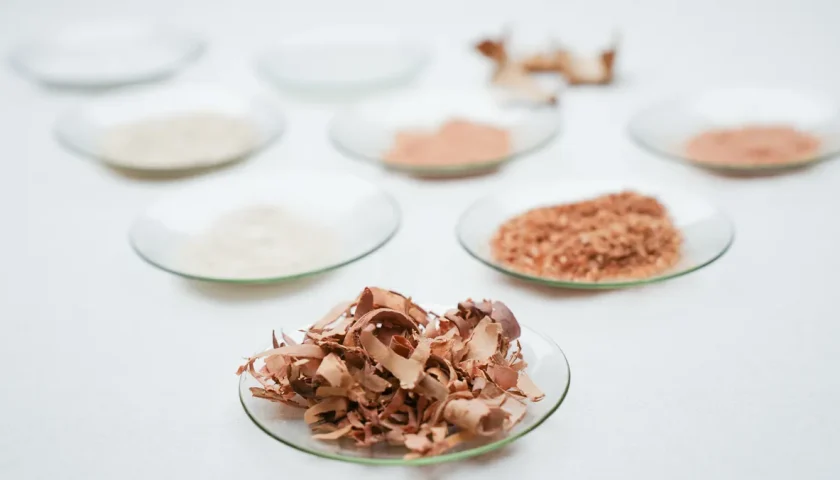
FINLAND – Innomost has developed a bio-based barrier coating derived from upcycled Nordic birch bark, offering moisture, grease and oxygen protection for food, dried goods and non-food packaging applications.
The Finnish biomaterials company’s Suberinno Suberin material provides an alternative to conventional fossil-based barriers and coatings.
Suberin is a naturally occurring protective substance found in plant cell walls, where its function in birch bark is to shield the tree from moisture, oils and environmental stress.
The barrier coating offers moisture and grease resistance alongside hydrophobic properties, adhesion and coating durability, and can be used alone or combined with other coating materials.
This versatility allows coating developers, paper and board manufacturers, and converters to adjust film formation, barrier performance and processing properties according to substrate and intended application.
Functionality Must Match Conventional Performance
Dr Sami Selkälä, founder and chief technical officer at Innomost, said replacing fossil-based barrier materials required more than renewable raw materials, noting the coating must provide the functionality required by the packaging application and work with different substrates and formulation systems.
Niko Mellanen, chief science officer at Innomost, observed that Suberinno Suberin was particularly interesting because it could contribute moisture, grease and oxygen-barrier properties within the same material.
He added that it could serve as a principal functional component in selected systems or be combined with other coating materials to achieve required performance.
Production Scaling Planned Within Three Years
The material is currently produced at Innomost’s facility in Kokkola, Finland.
The company aims to scale production through an industrial plant within the next two to three years, responding to rising demand for sustainable alternatives to fossil-based polymers.
In food packaging applications, bio-based barrier coatings must protect products with the same efficacy as conventional coatings, a threshold that has limited commercial adoption of many renewable alternatives.
Regulatory Scrutiny Accompanies Bio-Based Growth
The Circular Bio-based Europe Joint Undertaking expects several bio-based material projects it funds to achieve widespread market adoption over the coming years.
However, new research found that some bio-based packaging and tableware contain potentially harmful chemicals that can migrate into food they contact, underscoring the need for thorough safety assessment alongside sustainability claims.
Innovations in foodservice continue capitalising on materials including seaweed, pea proteins and minerals, increasingly recognised by regulators.
Earlier this year, Henkel Adhesive Technologies collaborated with Sekab to accelerate the transition from fossil-based to bio-based raw materials in adhesive production, while Notpla partnered with Dutch quick-service restaurant Kwalitaria to advance its seaweed-based coating for trays and containers.
Subscribe to our email newsletters that provide busy executives like you with the latest news insights and trends from Africa and the World. SUBSCRIBE HERE

Be the first to leave a comment