

Polytag expands UV packaging tracking network into Scotland
With UV-tagged packaging, brands get targeted visibility into product recovery in Scotland, a market with distinct collection infrastructure and regulatory frameworks compared with England.
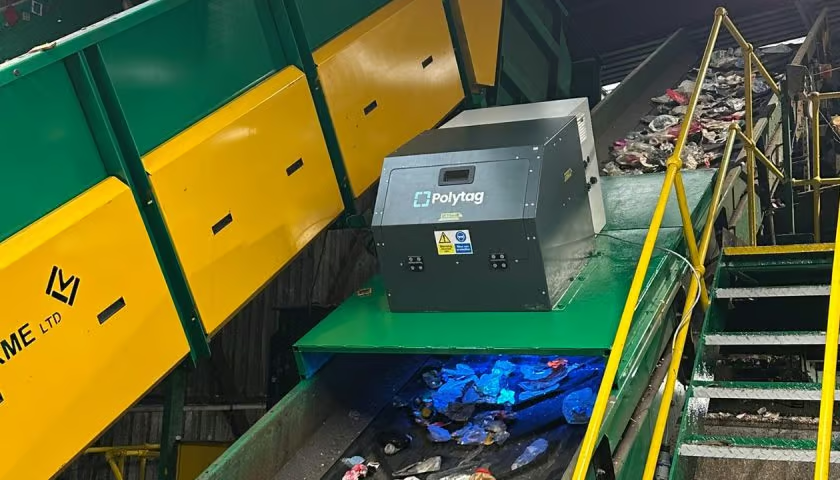
UK – Polytag has extended its Ecotrace Programme to Scotland, deploying ultraviolet tag detection technology at Wyllie Recycling’s plant in Perth to provide brands with detailed data on what happens to their packaging after consumers dispose of it.
The deployment represents Polytag’s 15th UV detection unit, expanding the company’s coverage of material recovery facilities across the United Kingdom.
Wyllie Recycling runs a 4.5-acre site in Perth handling twin-stream kerbside recycling from several Scottish local authorities, processing 15,000 tonnes of post-consumer plastic packaging annually.
Brands using UV-tagged packaging will gain specific insight into the recovery of their products in Scotland, a market with distinct collection infrastructure and regulatory frameworks from England.
Barcode-Level Data Captures Material Characteristics
Polytag’s system identifies invisible UV tags applied to packaging as material passes through participating recycling sites.
It records barcode-level information on which tagged items are detected, along with the location and timing of each detection.
Depending on the data embedded in the tag, the technology can also capture information such as plastic melt flow temperature, the packaging converter and food-grade status.
This granular data moves beyond aggregate recycling rate statistics, allowing brands to trace specific packaging formats through sorting and processing stages.
EPR Compliance Drives Demand for Verified Data
The data collected through the Ecotrace initiative can support assessments of packaging performance, packaging-design decisions and the evidence base for recycling outcomes as the United Kingdom’s Extended Producer Responsibility system develops.
Under EPR, producers face fees tied to the recyclability and actual recovery of their packaging, making verified data on material fate commercially valuable.
Brands that can demonstrate higher recovery rates for specific formats may reduce their financial obligations while identifying design changes that improve recyclability.
Invisible Tags Preserve Aesthetics and Recyclability
Polytag’s approach embeds UV tags that remain invisible to consumers, avoiding aesthetic compromises that visible markers would impose.
The tags survive sorting processes and can be detected without disrupting material flows.
In February, Polytag, Saica Flex and Paragon partnered to supply packaging labels with invisible UV tags, combining detection technology, packaging production capabilities and UV ink formulations.
Alice Rackley, chief executive of Polytag, said bringing Ecotrace to Scotland was an important step in building a clearer picture of what happens to packaging after use, noting that recycling did not stop at the point a household put its packaging out for collection and that better visibility was needed to make meaningful progress toward a circular economy.
Subscribe to our email newsletters that provide busy executives like you with the latest news insights and trends from Africa and the World. SUBSCRIBE HERE


Be the first to leave a comment