

Poland introduces packaging fees, recycling obligations
Producers and importers will be accountable for the collection and recycling of packaging waste
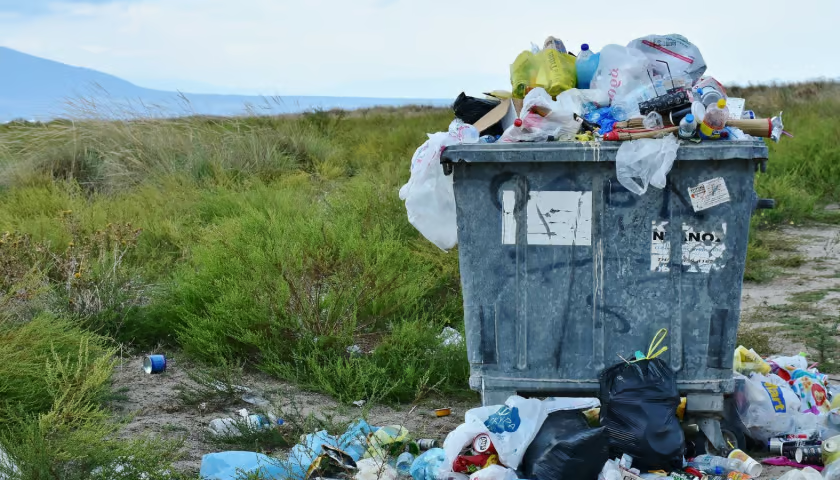
POLAND- Poland has unveiled a draft act to overhaul its packaging and packaging waste management, aiming to reduce waste and enhance recycling efforts.
According to the Ministry of Climate and Environment, the regulations, released on August 13, 2025, introduce extended producer responsibility (EPR) rules, placing financial and operational burdens on producers and importers.
The new system, set to begin in 2026 with full implementation by 2028, shifts the cost of waste management from municipalities to businesses.
Under the proposed rules, producers and importers must manage the collection, transport, and recycling of packaging waste.
A key feature is a packaging fee, starting at roughly US$0.001 per package in 2026 and increasing gradually until 2028.
This fee, calculated based on packaging mass, aims to encourage companies to minimize packaging and prioritize recyclable materials.
“The fee structure is designed to drive sustainable practices without significantly impacting consumer prices,” said a Ministry spokesperson.
Funds will be managed by the National Fund for Environmental Protection and Water Management (NFOŚiGW) and allocated to municipalities and recycling entities.
The draft aligns with the EU’s Packaging and Packaging Waste Regulation (PPWR), effective from mid-2026, mandating recyclable packaging and a minimum 30% recycled content in PET packaging by 2030.
It also promotes reusable packaging and refill systems while setting waste reduction targets: 5% per capita by 2030, 10% by 2035, and 15% by 2040.
Businesses, particularly in food, cosmetics, and e-commerce, face significant compliance challenges, including adapting packaging and implementing reporting systems. Non-compliance could result in fines up to US$480,000.
Industry groups have voiced concerns over the centralized system managed by NFOŚiGW, replacing existing recovery organizations.
Some fear higher costs and reduced flexibility, with critics arguing it may complicate compliance with EU recyclability goals.
A recent update, reported on September 4, 2025, highlights industry pushback, with organizations like EUROPEN warning that the state-run model could increase administrative burdens and hinder recycling progress.
Despite this, the Ministry emphasizes that early adaptation could foster innovation and competitive advantages.
The draft is under public consultation until early October 2025, with adoption planned for the fourth quarter.
Companies are urged to audit packaging portfolios and integrate EPR compliance into sustainability strategies to prepare for the changes.
“Businesses that act swiftly can turn these obligations into opportunities for innovation,” noted an environmental consultant.
Subscribe to our email newsletters that provide busy executives like you with the latest news insights and trends from Africa and the World. SUBSCRIBE HERE


Be the first to leave a comment