

Screen & inkjet printing surge in industrial sector, hitting US$81.7B in 2025
Inkjet printing is the fastest-growing technology, with its market projected to grow from US$51.12 billion in 2025 to US$78.90 billion by 2034.
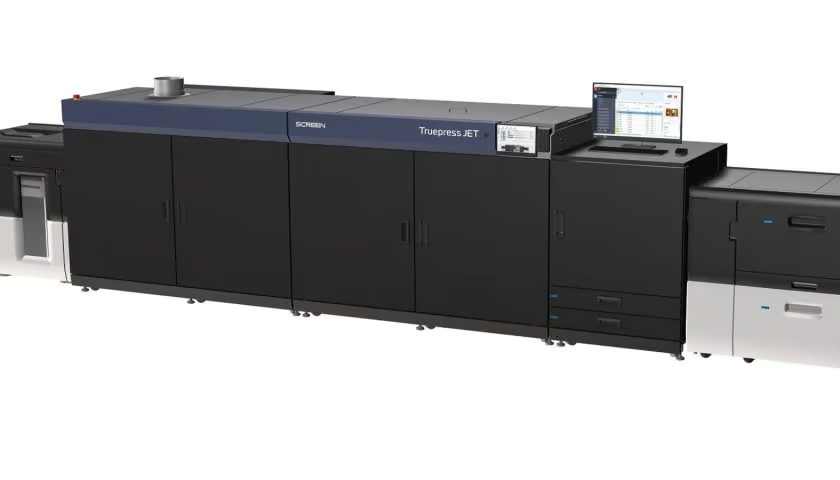
GLOBAL – In 2025, the industrial printing market sees screen and digital methods reach a combined value of US$81.7 billion, capturing 58.8% of the global market by value and 75.1% by volume.
This growth comes amid shifting demands across sectors like textiles, automotive, electronics, and packaging, where these technologies handle functional applications from coatings to circuit printing.
A recent analysis outlines the trajectory through 2030, noting that while screen printing faces declines in traditional graphics and labels, it gains traction in specialized industrial uses.
“We’re seeing screen methods adapt to high-viscosity materials in automotive and electronics, keeping pace despite inkjet’s rise,” said Dr. Jane Ellis, lead researcher at the study firm.
The value for screen printing in industrial applications starts at US$63.8 billion this year and climbs to US$79.3 billion by 2030, with a 4.4% compound annual growth rate.
Digital printing, led by inkjet, shows even stronger momentum, expanding from US$194.3 billion in 2025 to US$244.6 billion in 2030 at a 4.7% compound annual growth rate.
Manufacturers are investing heavily in inkjet systems to cut ownership costs and boost automation.
In functional printing, inkjet already dominates ceramics production, and emerging printheads now handle diverse fluids for electric vehicle batteries and biomedical devices.
These areas lead the fastest expansion, with overall digital applications in packaging, labels, and graphics valued at US$166.9 billion this year, projected to hit US$204.8 billion by 2030 via a 4.2% compound annual growth rate.
Packaging drives much of this, outpacing labels as graphics demand eases.
Screen printing holds a niche in packaging for opaque coatings and embellishments on labels and stocks.
Innovations here include digital exposure techniques that enhance productivity, trim expenses, and ease skill requirements.
Research and development efforts target rotary screen lines for varied fluids, supporting sustainable material use in eco-friendly packaging designs.
A new initiative in Dubai integrates inkjet for recyclable flexible packaging, reducing waste by 30% in food sector trials.
Local firms reported that these systems enable precise, low-ink prints on biodegradable substrates, aligning with stricter environmental regulations.
“This technology lets us scale production without compromising on green standards,” noted Ahmed Khalil, operations director at a UAE-based converter.
Such projects signal broader adoption, with regional investments in digital print infrastructure expected to grow 5% annually through 2028.
Subscribe to our email newsletters that provide busy executives like you with the latest news insights and trends from Africa and the World. SUBSCRIBE HERE


Be the first to leave a comment