

South Australia leads global ban on plastic soy sauce fish containers
The iconic containers have become a staple in many Asian restaurants and takeaways around the world
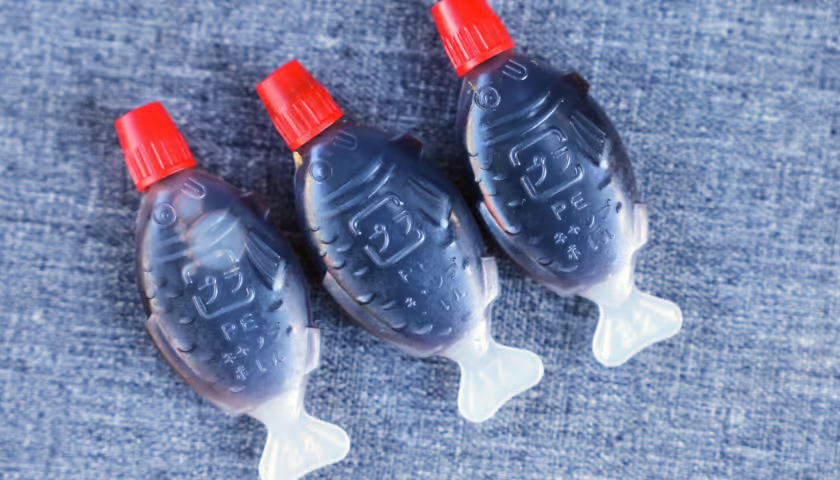
AUSTRALIA – South Australia has become the first region worldwide to ban plastic fish-shaped soy sauce containers, effective September 1, 2025.
The prohibition targets pre-filled containers under 30ml with lids, caps, or sealing mechanisms, commonly used in takeaway sushi meals.
These small dispensers, known as shoyu-tai or soy sauce snappers, are made from recyclable polyethylene but often evade recycling processes due to their size, frequently ending up in landfills or as environmental litter.
The ban extends the state’s environmental legislation, which began phasing out single-use plastics in 2021.
Previous measures eliminated plastic supermarket bags, straws, and cutlery.
According to Environment Minister Susan Close, the tiny containers are “easily dropped, blown away, or washed into drains,” contributing to beach and street litter.
The legislation also phases out non-compostable fruit and vegetable stickers and prepackaged cups and bowls for takeaway meals, pushing businesses toward sustainable alternatives like bulk dispensers or compostable containers.
Invented in 1954 by Teruo Watanabe in Japan, the fish-shaped containers transitioned from glass and ceramic to plastic, becoming a staple in sushi takeaways globally.
While larger soy sauce bottles and sachets remain unaffected, businesses are encouraged to adopt reusable options.
Close stated, “We hope businesses will focus on bulk dispensers to reduce single-use plastics entirely.”
Penalties for non-compliance range from US$210 to US$13,300, depending on the violation’s severity.
A January 2024 report by the Australia Institute suggested that a national tax on plastic packaging waste could generate US$1 billion annually, drawing inspiration from the European Union’s model.
South Australia’s proactive stance may influence other regions, with New South Wales and Tasmania considering similar restrictions on plastic sauce packaging by 2030.
Western Australia recently expanded its own bans to include non-compostable produce bags, effective September 2025.
Marine ecologist Nina Wootton from the University of Adelaide highlighted the environmental risks, noting that marine life often mistakes these containers for food.
She emphasized the importance of removing consumer choice barriers, saying it simplifies sustainable practices.
Since 2021, South Australian businesses have eliminated over 8 million single-use plastic items, demonstrating the impact of consistent policy efforts.
The state’s Plastic Free SA program continues to guide businesses toward eco-friendly solutions, ensuring compliance without compromising convenience.
This ban marks a significant step in reducing plastic waste, with South Australia setting a global precedent.
Subscribe to our email newsletters that provide busy executives like you with the latest news insights and trends from Africa and the World. SUBSCRIBE HERE


Be the first to leave a comment