

Kyushu University’s self-healing packaging film detects spoilage with colour-changing anthocyanin
The film detects spoilage through sealed packaging using natural pigments from purple sweet potato and red cabbage, addressing a key shortfall in standard food packaging.
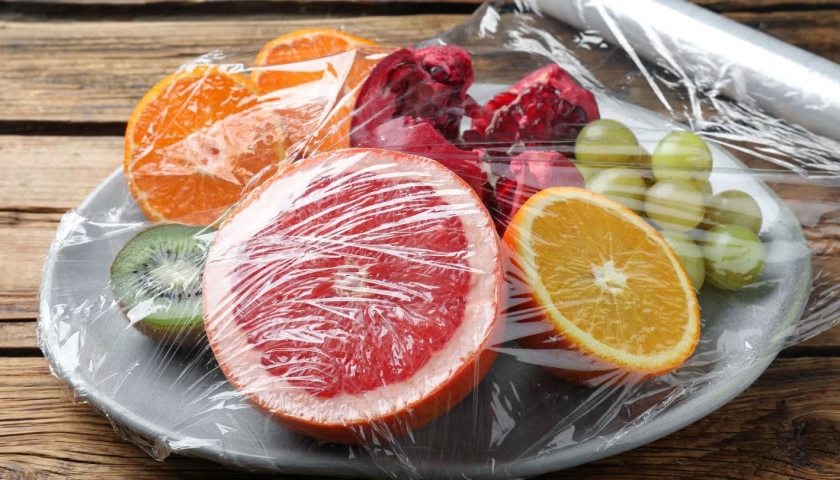
JAPAN – Scientists at Kyushu University have developed a flexible, self-healing hydrogel film that uses anthocyanin pigments to change colour as food spoils, with trials showing pork wrapped in the film remained usable for approximately 12 hours longer than untreated samples.
The film addresses a common weakness in standard food packaging by indicating spoilage without opening the sealed pack, using natural pigments from plants including purple sweet potato and red cabbage that alter colour as pH levels increase from purple-red towards yellow-green.
Most of the hydrogel is plant-derived and intended to be biodegradable, while the anthocyanin comes from an agricultural source.
Self-Healing Properties and Barrier Protection
The film is also self-healing, so minor damage during transport or handling can mend itself and help preserve the barrier function of the packaging.
Professor Fumihiko Tanaka stated that in conventional packaging, any crack is permanent and becomes an entry point for bacteria, but this material bonds back together on its own, making it more durable and reliable in practical use.
The research team protected the anthocyanin pigment by attaching it to a metal-organic framework, a porous structure that helps preserve the pigment’s sensitivity to pH changes while preventing breakdown under heat and light.
The protected pigment was then added to a hydrogel, producing a soft and mouldable film made largely from plant-based material.
Food Storage Trials and Commercial Implications
Trials using pork found that the film’s colour shifted steadily as the meat spoiled, in line with the release of alkaline gases, while pork wrapped with the film remained usable for about 12 hours longer than untreated samples.
For food producers, the project points to packaging that could combine several functions in one material, protection, shelf-life improvement and freshness indication, instead of using separate systems.
The work is part of broader efforts to reduce food waste and improve the reliability of packaging, particularly for fresh and perishable products.
Further development will be needed to scale production and test the material across a wider range of food categories before commercial application.
The technology could be particularly valuable for meat, fish and fresh produce packaging where visual indicators provide consumers and retailers with a clear sign of product condition without opening packaging, reducing food waste by enabling informed decisions about product freshness.
The film’s self-healing properties also make it suitable for transport and handling conditions where packaging damage is common, potentially reducing spoilage rates in supply chains.
Subscribe to our email newsletters that provide busy executives like you with the latest news insights and trends from Africa and the World. SUBSCRIBE HERE

Be the first to leave a comment