
Tanzania, Algeria forge pharma packaging pact as Algerian factories target African export market
Cooperation between the two countries will create opportunities in investment, tech transfer, and training, strengthening Africa’s production of essential medicines and equipment.
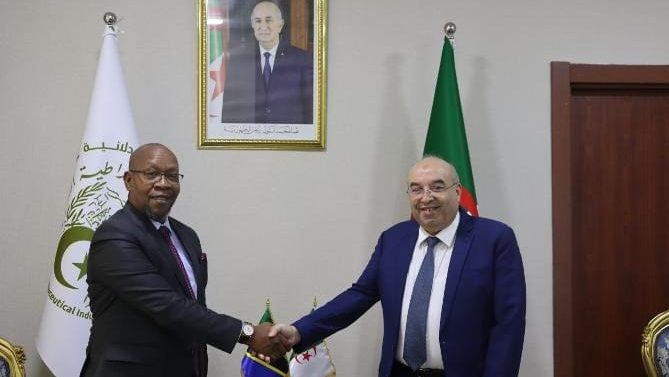
ALGERIA – Tanzania and Algeria have agreed to deepen pharmaceutical manufacturing cooperation, with Algeria pledging to transfer technology and expertise to help Tanzania develop its local production capacity and position itself as an export hub for medicines and pharmaceutical packaging serving a regional market of approximately 350 million people.
The agreement was reached in Algiers between Tanzanian Ambassador Mobhare Matinyi and Algerian Minister of Pharmaceutical Industry Dr Wassim Kouidri.
The discussions focused on strengthening bilateral cooperation in the pharmaceutical industry, an area Tanzania is treating as both a public health priority and an industrial opportunity.
Algeria, which has approximately 230 pharmaceutical factories representing over one-third of Africa’s manufacturing facilities, produces about 82 percent of its pharmaceutical needs locally.
Tanzania’s 80% Local Production Target and Five Factories Under Construction
For Tanzania, expanding pharmaceutical manufacturing is linked to reducing dependence on imported medicines.
The Tanzania Medicines and Medical Devices Authority (TMDA) says the country relies heavily on imports, while the government has set a target of achieving 80 percent local production of health products by 2030.
Ambassador Matinyi stated that the Tanzanian government has introduced special incentives to attract investment into the pharmaceutical industry and that five factories are already under construction with additional investments expected.
Investors can benefit from fiscal and non-fiscal incentives, including exemptions and reductions on selected taxes, duties and regulatory fees.
Pharmaceutical packaging, ranging from primary containers like blister packs and bottles to secondary labelling and cartons, will be essential to this expansion, as it ensures product safety, stability, and regulatory compliance for both domestic and export markets.
Algerian ANPP Visit and WHO Maturity Level 3 Regulatory Cooperation
The Algerian National Pharmaceutical Products Authority (ANPP) is expected to visit Tanzania in October 2026 at the invitation of TMDA to explore areas of technical cooperation in pharmaceutical regulation.
Tanzania became the first African country to attain WHO Maturity Level 3 (ML3) under the Global Benchmarking Tool in 2018, reflecting the capacity of its national medicines regulatory system.
The cooperation between the two countries is expected to create opportunities for investment, technology transfer, and skills development while strengthening Africa’s capacity to produce essential medicines and medical equipment.
Ambassador Matinyi stated that the government is determined to turn Tanzania into an export hub for pharmaceutical and medical equipment in the Eastern, Central and Southern African region, which has a population of approximately 350 million people.
The sustainable pharmaceutical packaging market in Tanzania is expected to grow significantly, driven by demand for innovative and eco-friendly solutions that ensure product safety and compliance with regulations.
Subscribe to our email newsletters that provide busy executives like you with the latest news insights and trends from Africa and the World. SUBSCRIBE HERE

Be the first to leave a comment