
UAE University, Emirates biotech launch organic waste composting plant
Capable of processing up to 40 kilograms of organic waste once operational, the plant will be built over 6–12 months on land near the university.
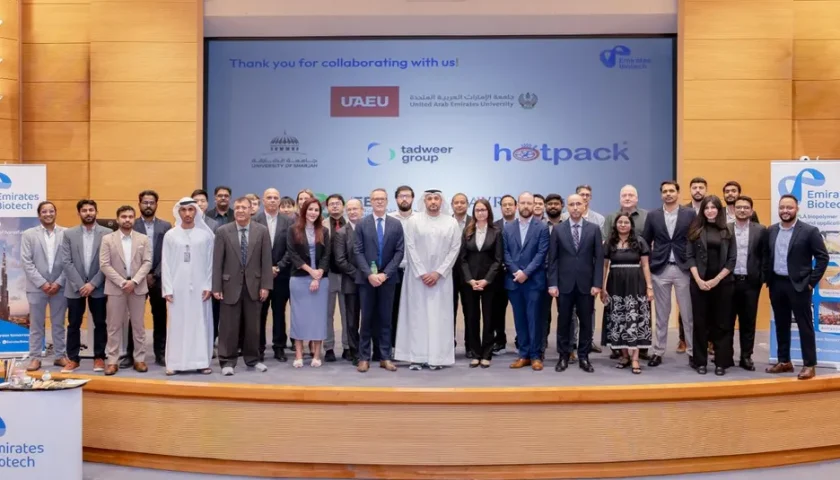
UAE – Emirates Biotech and United Arab Emirates University have launched the UAE’s first integrated organic waste composting plant in Al Ain, converting food leftovers and compostable packaging into renewable biogas and nutrient-rich compost.
The plant will be capable of processing up to 40 kilograms of organic waste once operational.
Construction of the unit is expected to take six to 12 months on a plot near the university.
Composting, the managed natural process of recycling organic waste, dates back thousands of years and is now primed to play a key role in the UAE’s environmental drive.
When organic material is discarded, its potential energy is wasted and it ends up in landfill.
Composting Supports Food Security Ambitions
Zafar Said Sher, associate professor in the department of mechanical and aerospace engineering at UAEU, said humans were organic and decomposed, noting that everything had a cycle and asking why food waste and plastic could not follow the same cycle.
He described composting as the future and organic waste as an opportunity, observing that after a couple of decades the project might enhance fertile land and replace sand or desert, delivering security in food production.
Francois de Bie, chief commercial officer for Emirates Biotech, said the UAE wanted to be more self-supporting in agriculture, noting that building a growing agricultural base required fertile land.
Methane Emissions Drive Circular Economy Push
Organic waste dumped in landfills produces methane, which is up to 28 times more harmful than carbon dioxide.
In the UAE, 40 percent of generated waste is organic. De Bie noted that Europe, the United States, India and China had recognised this long ago, establishing separate collection of green and organic waste, adding that composting was the only viable option for collected organic waste and would help fertilise land again.
The project supports the Nema initiative launched in 2022, which aims to cut food waste by 50 percent by 2030, alongside Naseej, the national textile circularity initiative launched in June.
PLA Plant to Produce 80,000 Tonnes Annually
Emirates Biotech is also building the region’s largest polylactic acid plant in Kezad, expected to be operational by 2029.
The facility will produce 80,000 tonnes of PLA annually with an on-site recycling complex.
De Bie said producing the material locally would reduce the need to import PET from China or Indonesia.
The closure of the Strait of Hormuz due to the Iran war has delayed the project, which requires large machinery brought through Khalifa Port. Al Ain was chosen partly for its farming history, dating back to the traditional falaj irrigation system.
Subscribe to our email newsletters that provide busy executives like you with the latest news insights and trends from Africa and the World. SUBSCRIBE HERE

Be the first to leave a comment