

Fi Africa draws 16,000 attendees, premium packaging touted as MENA’s top purchasing driver
Premiumization today is not only about luxury aesthetics; consumers increasingly expect premium packaging to also deliver functionality, convenience, sustainability, and product protection.
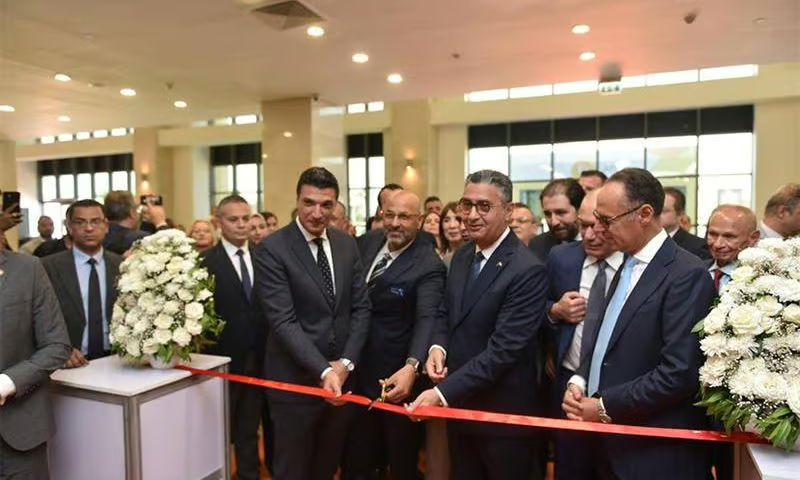
EGYPT – Fi Africa and ProPak MENA 2026 has drawn over 400 exhibitors and approximately 16,000 attendees from more than 35 countries to Cairo, where FSSC’s Necat Kirkil declared that packaging has become the leading purchasing differentiator across the Middle East and North Africa.
The event, held at Egypt’s International Exhibition Center from June 2–4, served as the region’s largest food ingredient and F&B packaging exhibition. Kirkil, regional representative at FSSC, held a workshop on global food safety requirements.
He noted that packaging reflecting local values, traditions, and consumer preferences creates stronger consumer connections and helps brands stand out in increasingly competitive markets.
The region’s young and highly digital population is accelerating change, with exposure to global brands and social media driving demand for premium packaging experiences, particularly in the GCC.
Premiumization as a Revenue Driver
Many F&B companies are generating real revenue growth simply by redesigning packaging to look and feel more premium, creating renewed consumer interest without changing the product itself.
The trend is even more pronounced in cosmetics, fragrances, and personal care, where packaging is integral to the consumer experience.
Across the GCC, rising purchasing power and social media influence have increased demand for premium materials, distinctive designs, and memorable unboxing experiences.
Kirkil noted that packaging ideas born in Dubai and Riyadh are now inspiring product launches beyond the region.
Premiumization today is not only about luxury aesthetics; consumers increasingly expect premium packaging to also deliver functionality, convenience, sustainability, and product protection.
Gen Z Demands Transparency
Younger consumers across the region are paying increasing attention to recyclability claims and packaging transparency.
Having grown up digitally connected, Gen Z expects clear, honest communication about what packaging is made from and whether it can be recycled, and is increasingly skeptical of vague environmental claims.
This shift is driving manufacturers toward monomaterial packaging, which improves recyclability while maintaining product protection and shelf appeal.
Purchasing decisions are rarely driven by sustainability alone; affordability, convenience, and product quality remain critical.
The trend is not that younger consumers choose between sustainability and value, but that they increasingly expect both.
Regulation and Resilience
Several countries are taking concrete steps.
The UAE has introduced measures to reduce single-use plastics, while Saudi Arabia’s Vision 2030 is driving investments in recycling, waste reduction, and circular economy infrastructure.
Many MENA manufacturers supply European markets and will increasingly need to align with evolving expectations on recyclability, material reduction, and traceability, particularly developments such as the EU’s PPWR.
Recent supply chain interruptions have reinforced the importance of resilience and food security, with governments encouraging greater local manufacturing capacity.
Subscribe to our email newsletters that provide busy executives like you with the latest news insights and trends from Africa and the World. SUBSCRIBE HERE


Be the first to leave a comment