

Pick n Pay, EWaste Africa recycling partnership deploys 95 in-store drop-off points in South Africa
Consumers can deposit unwanted devices into specialized containers with no prior booking, handling fees, or paperwork required.
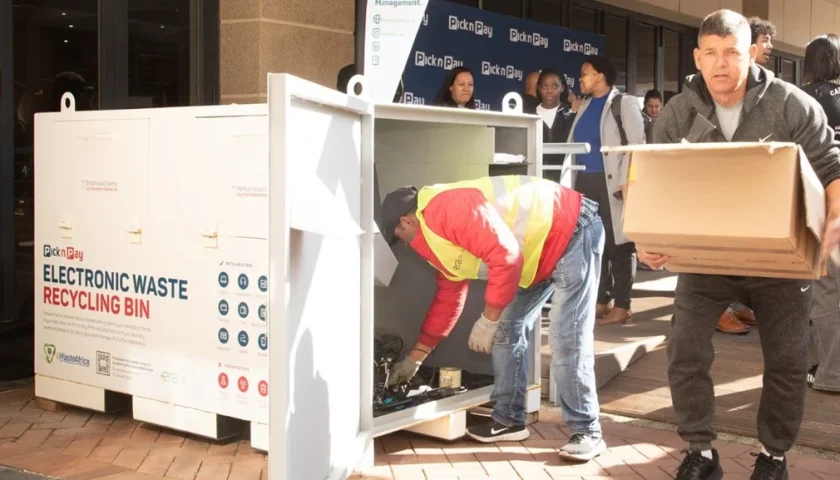
SOUTH AFRICA -EWaste Africa has partnered with Pick n Pay and the Electronic Responsibility Association to deploy more than 95 in-store e-waste recycling collection points across South Africa, targeting 200 locations by 2027 as the country recycles less than 10 percent of its 530,000 tonnes of annual e-waste.
The initiative aims to confront South Africa’s low electronics recycling rates by embedding drop-off points directly into retail environments.
Consumers can deposit unwanted devices into specialized containers with no prior booking, handling fees, or paperwork required.
Eligible items include mobile phones, tablets, laptops, chargers, batteries, lightbulbs, disposable vapes, and small appliances like kettles and toasters.
Since the beginning of 2025, the partnership has collected 124 tonnes of e-waste, demonstrating growing consumer participation.
How EPR Regulations and 95 In-Store Recycling Bins Drive Formal E-Waste Collection
The collection drive operates under South Africa’s Extended Producer Responsibility regulations, enacted in 2021, which legally mandate that electronics producers, importers, and retailers take financial and operational responsibility for end-of-life handling of goods they sell.
South Africa is the second largest producer of e-waste on the African continent, behind Egypt.
The Global E-Waste Monitor 2024 reveals that the world produced 62 million tonnes of e-waste in 2022, with Africa formally recycling less than one percent of its electronic waste.
Mark Williams-Wynn, Chief Technology Officer at EWaste Africa, stated that e-waste is classified as hazardous waste, and yet the majority of it is still not being properly collected or recycled.
He warned that discarded electronics can leach severe neurotoxins like lead and mercury into soil and groundwater, while lithium-ion batteries pose significant fire risks if damaged or compacted.
Why 90-95% of E-Waste Remains Unrecycled Despite Landfill Ban
Although e-waste was legally banned from South African landfills in 2021, EWaste Africa estimates that 90 to 95 percent of this material never reaches a specialized recycling facility, remaining trapped in domestic storage or dumped illegally.
The broader Africa packaging and recycling sector is projected to grow from US$45.15 billion in 2025 to US$58.46 billion by 2031 at 4.4 percent compound annual growth, driven by urbanization and increasing consumer awareness of sustainability issues.
The ERA reported achieving 115 percent of its collection and recycling targets for waste electrical and electronic equipment in 2025, with a landfill rate of just 0.27 percent, bringing the organization close to its goal of zero waste to landfill.
Subscribe to our email newsletters that provide busy executives like you with the latest news insights and trends from Africa and the World. SUBSCRIBE HERE


Be the first to leave a comment