

Alba shuts three smelting lines, advances circular economy goals through recycling
By concentrating strategic raw material inputs on the most sustainable operating configuration, Alba aims to maintain production resilience while managing working capital prudently during a period of supply volatility.
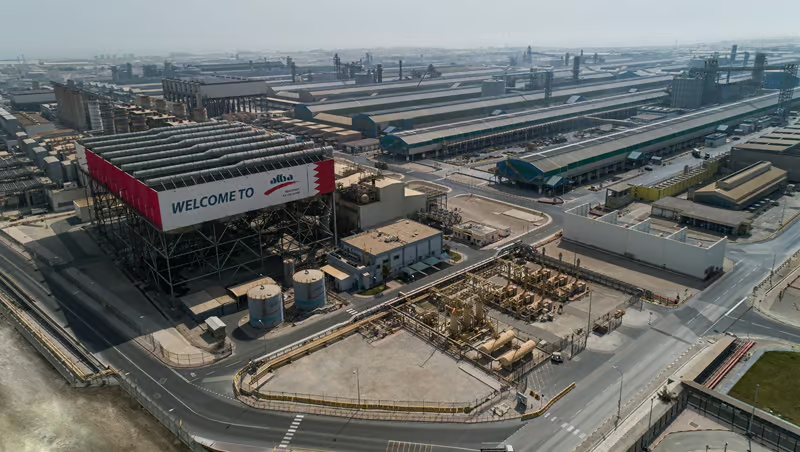
BAHRAIN – Aluminium Bahrain has initiated a controlled shutdown of three production lines amid supply disruptions, while simultaneously advancing major recycling projects that reinforce its commitment to the circular economy.
The company, one of the world’s largest aluminium smelters, confirmed it is temporarily idling Reduction Lines 1, 2, and 3, representing 19 percent of its total annual production capacity of 1,623,000 metric tonnes, as an operational measure to preserve business continuity.
The decision comes in response to ongoing supply and transit disruptions affecting the strategically vital Strait of Hormuz.
Strategic Shutdown Enables Asset Care
This targeted action is designed to optimise the utilisation of Alba’s existing raw materials inventory and prioritise operational stability across its remaining Reduction Lines 4, 5, and 6.
By concentrating strategic raw material inputs on the most sustainable operating configuration, Alba aims to maintain production resilience while managing working capital prudently during a period of supply volatility.
As part of the controlled shutdown strategy, Alba will implement structured asset care and maintenance for the affected lines, including comprehensive housekeeping to maintain equipment integrity for a safe restart once conditions improve.
The company stated that the shutdown minimises health, safety, environmental, and operational risks while safeguarding long-term asset performance.
Recycling Infrastructure Advances Despite Disruptions
Even as it navigates these operational challenges, Alba continues to make significant progress on its sustainability and recycling agenda.
The company’s Spent Pot Lining Treatment Plant, a first-of-its-kind facility in the GCC and Middle East, has reached 42 percent completion.
The plant has an annual capacity to treat 30,000 to 35,000 tonnes of SPL, transforming hazardous waste into a value-added product called HiCal for use in construction and cement industries.
Alba is also advancing its strategic partnership with Japan’s Daiki Aluminium Industry through the newly formed Alba-Daiki Sustainable Solutions joint venture.
This facility will process aluminium dross to recover valuable aluminium metal while significantly reducing waste.
Both partners intend for the plant to commence operations by September 2026, employing state-of-the-art technology to recover aluminium and produce aluminium oxide.
EternAl Product Line Embodies Circular Principles
Alba’s commitment to recycling extends to its product offerings.
The company’s EternAl low-carbon aluminium product line features EternAl-30 and EternAl-15, incorporating 30 percent and 15 percent recycled scrap metal respectively.
This innovation reduces Alba’s environmental footprint while empowering customers to achieve their own sustainability goals across the supply chain.
Subscribe to our email newsletters that provide busy executives like you with the latest news insights and trends from Africa and the World. SUBSCRIBE HERE


Be the first to leave a comment