

Scientists unveil rapeseed waste-derived packaging film with 110% strength boost, 21-day soil degradation
Ideal for coatings, wraps, or liners on fresh produce and other foods at risk of dehydration, oxidation, browning, and microbial decay.
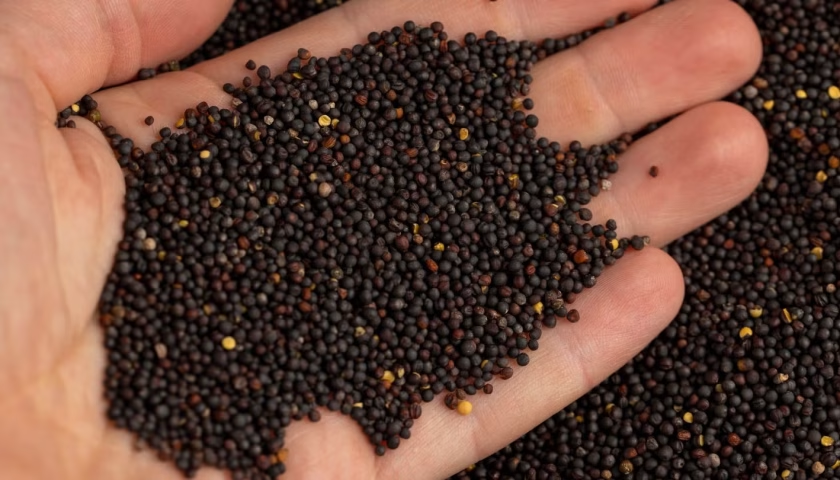
CHINA – Scientists have developed a biodegradable packaging film from rapeseed-processing leftovers, with the chitosan-based material demonstrating a 110 percent increase in tensile strength, 89.7 percent antioxidant activity, and complete soil degradation within 21 days for fresh produce preservation.
The study, published in Food Quality and Safety and conducted by researchers at Dalian Polytechnic University in collaboration with INNOBIO Corporation, created the film using chitosan combined with phenolic compounds extracted from rapeseed cake, flowers, stems and leaves.
The team also produced 60-nanometre silver nanoparticles from these plant extracts under mild conditions and incorporated them into the chitosan material.
Mechanical and Barrier Properties Exceed Pure Chitosan Films
Compared with pure chitosan film, the rapeseed-cake extract version with silver nanoparticles showed tensile strength rising from 8.1 MPa to 17.0 MPa, a 110 percent improvement, while the water contact angle increased from 55.7° to 87.2°, indicating reduced water attraction and improved moisture resistance.
Among different formulations, the flower-based film exhibited the highest antioxidant activity, recording 89.7 percent scavenging in the DPPH test and 62.3 percent in the ABTS test.
The rapeseed-cake version also demonstrated antibacterial activity against Escherichia coli and Staphylococcus aureus.
Food Storage Trials Show Extended Freshness for Tomatoes and Mushrooms
In food storage trials, coated cherry tomatoes maintained more weight, ascorbic acid and titratable acidity than untreated samples.
Enoki mushrooms packed with the films showed reduced browning and less microbial spoilage.
Soil burial tests confirmed complete decomposition within 21 days without significantly affecting bok choy growth, while energy-dispersive X-ray spectroscopy detected no silver migration on tested tomatoes, though the study described this only as preliminary evidence.
Potential Applications and Commercialisation Pathway
The films may be suitable for coatings, wraps or liners for fresh produce and other foods prone to dehydration, oxidation, browning and microbial decay.
The authors noted that commercial use would still require larger-scale production methods, cost and sensory evaluation, standardised food-contact testing, and trials under transport and storage conditions.
The findings indicate that crop-processing residues may serve not only as raw material replacements but also as sources of useful chemical properties in packaging.
This research aligns with broader efforts to valorise agricultural waste, as rapeseed meal is a by-product of oil extraction with high protein content (34-45 percent) and notable amounts of phenolic compounds with antioxidant potential.
The development represents a significant step toward reducing plastic waste while utilising agricultural by-products, offering a sustainable alternative for food packaging applications.
Subscribe to our email newsletters that provide busy executives like you with the latest news insights and trends from Africa and the World. SUBSCRIBE HERE

Be the first to leave a comment