

Kcal brings DIDI student’s packaging design to commercial production
The initiative shows the value of education-industry collaboration, letting students tackle a real commercial brief and learn the creative and practical sides of bringing a design to market.
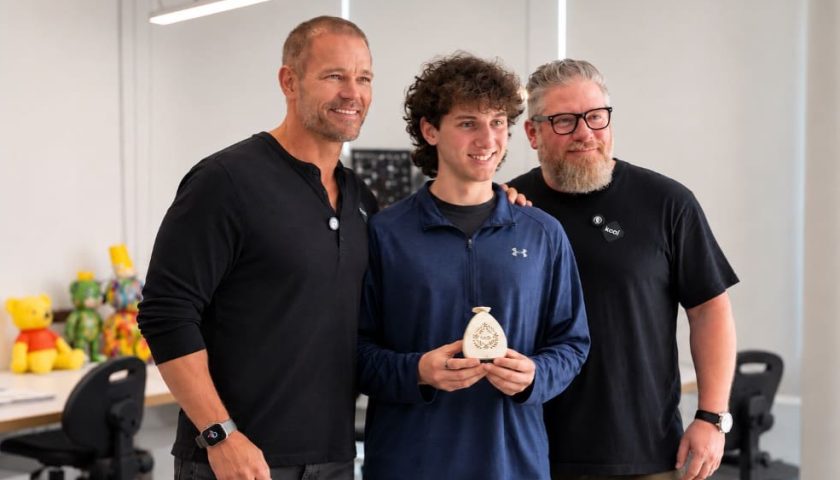
UAE – Kcal, the UAE-based premium food and nutrition brand, has brought a student-designed packaging concept to life following a creative collaboration with the Dubai Institute of Design and Innovation, adapting the winning design for its commercial snack packaging.
The initiative saw 30 students take on a real-world design challenge, with the winning concept subsequently adapted and produced for Kcal’s snack packaging.
The challenge began on 5 October, tasking students with developing original packaging concepts that combined creativity, functionality and sustainability.
Over two weeks, students developed their ideas before presenting final designs to a judging panel on 19 October, which included Kcal co-founder and chief executive Andreas Borgmann and creative director James Birch. Marc Najm was selected as the winner for his flower-inspired packaging concept, created from a single folded sheet of paper.
Laser Cutting Replaces Ink for Decorative Detail
Najm said he wanted to create packaging that protected a single item, inspired by the way a flower blooms to reveal what was inside.
He noted that sustainability was an important consideration, so he challenged himself to create something using just one piece of paper, folded to enclose the product while resembling the petals of a flower.
He then incorporated intricate floral detailing using laser cutting rather than ink, adding that he enjoyed the challenge because it pushed him to think in new and creative ways.
Najm’s winning concept has since been adapted for commercial production, with the finished packaging retaining the flower-inspired structure and decorative detailing of his original design.
Production Constraints Require Design Adaptation
Birch said that after 26 years in design, it was refreshing to see the next generation approaching a brief with such creativity and enthusiasm.
He noted that Najm stood out almost immediately, possessing a natural understanding of design, a clear thought process and the confidence to explain his ideas without overcomplicating them.
Birch added that bringing the concept into production was an equally valuable part of the experience, noting that production limitations and deadlines meant adapting certain details, which reflected the reality of working in design.
Industry-Education Collaboration Yields Market-Ready Concept
Borgmann said there was something special about seeing a young designer’s idea become a real product.
He noted that the company was impressed by the creativity and thought that went into the students’ work, expressing gratitude to the institute for bringing the collaboration together.
The initiative highlights the value of bringing education and industry together, giving students the opportunity to respond to a real commercial brief while gaining insight into the creative and practical considerations involved in bringing a design to market.
Subscribe to our email newsletters that provide busy executives like you with the latest news insights and trends from Africa and the World. SUBSCRIBE HERE


Be the first to leave a comment