
FMCG giants form consortium to replace flexible plastics with paper packaging
Backed by France’s (Re)Set, the PaperFlex Consortium targets paper alternatives to flexible plastics and stronger collection/recycling to keep plastics out of landfill, while FMCG partners fund bio-based material trials.
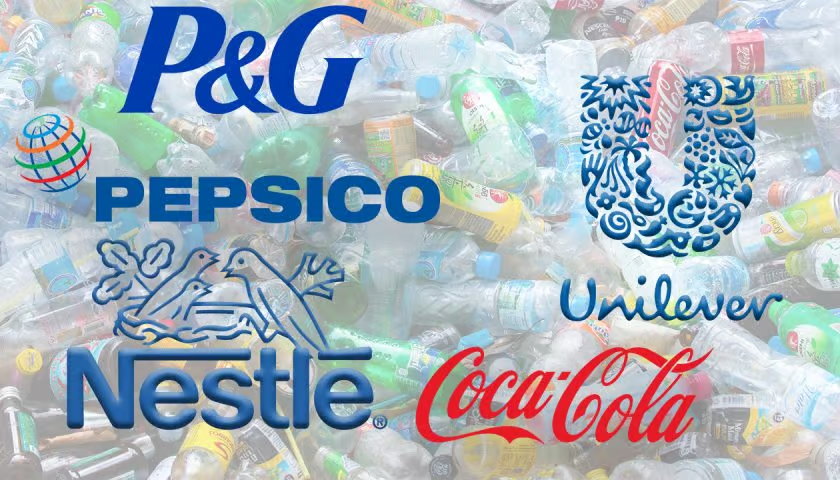
GLOBAL – Unilever, Nestlé, PepsiCo, Procter & Gamble, Colgate-Palmolive and Mars have joined an Ellen MacArthur Foundation consortium to accelerate development of paper-based flexible packaging and reduce plastic waste.
The PaperFlex Consortium, supported by France-based sustainability consulting firm (Re)Set, aims to create paper alternatives to flexible plastics while strengthening collection and recycling systems to divert plastics away from landfill and the environment.
Bio-based materials will play a role in the project, with the FMCG companies investing in trials for biodegradable coatings and other technologies designed to foster a circular packaging economy.
Founding members retain the ability to develop packaging strategies for their own independent interests alongside consortium goals.
Performance, Scale and Cost Gaps Persist
Sander Defruyt, strategy lead for plastics at the Ellen MacArthur Foundation, said responsible paper-based flexible packaging solutions did not yet exist at the performance, scale and cost required.
He noted that the consortium signalled strong demand for them and real ambition from six consumer goods companies to help scale them.
Defruyt added that the consortium remained open to other FMCG companies, innovators, suppliers and investors, observing that the faster such solutions were developed, the sooner they would reach the markets that needed them most.
Flexible Packaging Fastest-Growing Plastic Type
The Ellen MacArthur Foundation said flexible plastic packaging, including sachets, wrappers and pouches, was the fastest-growing type of plastic packaging worldwide, with scalable recycled solutions not widely available.
This gap has frustrated brand owners facing regulatory pressure and consumer criticism over packaging waste.
Paper-based alternatives must match the barrier performance, seal integrity and shelf-life protection that flexible plastics provide, particularly for food applications where moisture and oxygen exposure cause spoilage.
Unilever Accelerates Paper-Based Transition
Unilever’s Annual Report for 2025 indicated the company had either met its 2025 plastic packaging goals or was on track to meet future goals, while also signalling increased focus on transitioning to paper-based flexible packaging.
Pablo Costa, head of packaging, digital and transformation for research and development at Unilever, said dedicated teams were accelerating development of next-generation paper-based packaging that could be scaled while delivering the experience consumers expected.
He added that through the consortium, the company was helping bring together expertise, investment and shared learning needed to accelerate innovation and support a responsible transition at scale.
The initiative reflects growing recognition that fibre-based solutions require coordinated investment across material science, converting technology and end-of-life infrastructure to achieve viability at commercial volumes.
Subscribe to our email newsletters that provide busy executives like you with the latest news insights and trends from Africa and the World. SUBSCRIBE HERE
Be the first to leave a comment