

Glass: The material of choice for pharma packaging, strength, safety and a surge of innovation
Glass is crucial for pharma packaging due to its inertness, hermetic seal and light protection.

Glass has long been the backbone of pharmaceutical primary packaging, especially for injectable drugs, biologics and other high-value therapies. Yet its role in the industry is undergoing a transformation. Over the past years, the sector has shifted from viewing glass as a dependable legacy material to treating it as a dynamic platform for innovation, efficiency and safety.
This momentum comes from both sides of the value chain: pharmaceutical manufacturers and CDMOs continue to prioritize glass for its chemical inertness and robust barrier properties, while leading glass-makers are re-engineering the material to address concerns around breakage, supply security, delamination and sterile manufacturing efficiency.
As a result, glass packaging today sits at the intersection of engineering innovation, regulatory confidence and shifting global market demand. Understanding why this material remains dominant, even as polymer alternatives make incremental gains, requires a closer look at its intrinsic advantages, commercial performance and the rapid pace of innovation reshaping its future.
Why glass still wins: Material properties that matter most
At a materials-science level, the fundamental strengths of glass remain difficult to replicate. Type I borosilicate and other neutral pharmaceutical-grade glasses continue to offer unparalleled chemical inertness, resisting interactions with delicate molecules, solvents and biologics. This matters greatly in an industry where even minimal leachables and extractables can destabilize formulations, accelerate degradation or raise regulatory red flags.
Glass’s impermeability to gases and vapours further enhances drug stability, while its ability to tolerate extreme sterilization methods, from high-heat autoclaving to radiation, gives manufacturers process flexibility that many polymers cannot safely support. These intrinsic characteristics translate directly into regulatory and clinical advantages.
Longer shelf lives, predictable stability profiles and reduced material-drug interactions give regulators clearer compatibility data and manufacturers greater confidence that their products will maintain quality across the supply chain.
For biologics, where even small environmental deviations can compromise therapeutic integrity, this security remains indispensable. It is no surprise that glass vials, ampoules and cartridges still dominate in segments where efficacy, sterility and molecular sensitivity are paramount.
Market momentum: Strong growth backed by structural demand
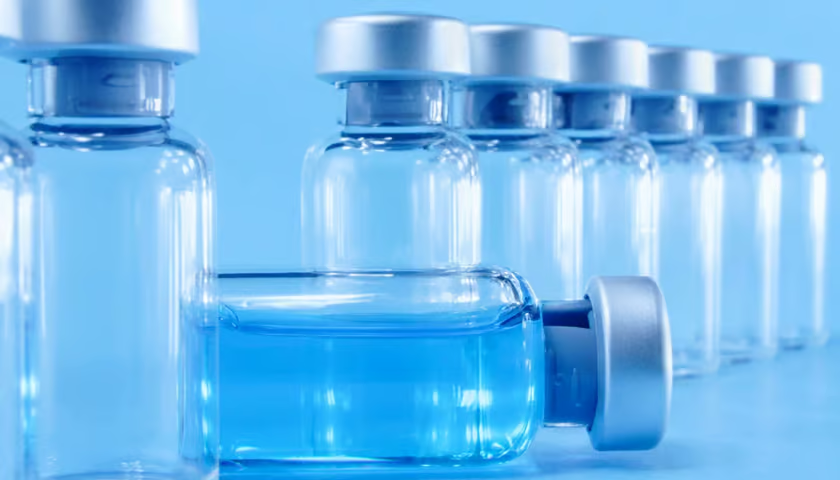
This scientific and regulatory foundation aligns with strong commercial performance. Market research over the past three years has consistently pointed to a growing pharmaceutical glass packaging sector.
Grand View Research estimates the market at approximately US$19.8 billion in 2023, with expectations of a robust compound annual growth rate of around 9.8% through 2030. Other analysts place the 2024–2025 global valuation in the low-to-mid tens of billions and forecast mid-single- to high-single-digit growth well into the next decade.
What explains this trajectory is not only the expanding market for biologics, one of the fastest-growing categories in drug development, but also broader industry shifts. Vaccination programs have expanded globally; sterile injectable generics continue to proliferate; and drug makers are increasingly adopting prefilled and ready-to-use (RTU) systems that rely heavily on high-quality glass containment.
This mix of structural tailwinds positions glass not just as a mainstay but as a growth category, attracting investment from converters, material scientists and packaging giants seeking a competitive edge in a high-value market.
Innovation frontlines: Coatings, strengthened glass and RTU systems
Much of the excitement in the glass arena comes from the surge of innovation addressing long-standing operational challenges. One of the most visible players in this space is Corning, which has developed a suite of strengthened and surface-engineered glass types, such as Valor® glass and the newer Velocity® and Viridian™ vial formats.
These products were designed to reduce breakage, friction and delamination, persistent issues on high-speed filling lines and during cold-chain handling. By reinforcing the glass structure and optimizing surfaces to lower particulate generation, Corning has positioned these innovations as solutions tailored for sensitive biologics and the demanding processing speeds of advanced manufacturing lines.
Pharmaceutical companies, facing pressure to increase throughput while meeting stringent regulatory controls, have responded positively to materials that enhance both safety and operational efficiency.
Other market leaders have taken a complementary approach by innovating at the process and container-preparation levels. SCHOTT, Gerresheimer and Stevanato Group, three giants in pharmaceutical packaging, jointly announced an “Alliance for RTU” in late 2024, signalling a coordinated industry push toward pre-sterilised, ready-to-fill containers.
RTU formats are increasingly attractive to CDMOs and pharma manufacturers because they simplify sterile production workflows. Instead of sterilizing vials or syringes in-house and managing multiple contamination-prone handling steps, manufacturers receive containers that are pre-washed, depyrogenated, sterilized and packaged for immediate use.
This streamlines operations, reduces capital costs, enhances product sterility and shortens time-to-filling, a key competitive metric in contract manufacturing. The alliance’s emergence reflects how deeply RTU adoption is shaping the strategic direction of the glass industry, especially as biologics continue to surge and contamination risk management becomes ever more critical.
Strengthening supply chains: Local capacity and strategic partnerships
Running parallel to these technological trends is a significant shift in supply-chain strategy. The pandemic exposed vulnerabilities in global pharmaceutical packaging supply chains, particularly around the availability of high-quality borosilicate tubing and the capacity to convert tubing into finished vials.
In response, glass manufacturers have intensified investments in regional capacity-building. Gerresheimer and Corning’s 2023 joint arrangements strengthened production closer to key pharma hubs, ensuring shorter lead times and reducing the risk of supply disruptions for biologics with tight manufacturing windows.
Companies such as SGD Pharma and other converters have announced expansions in Asia, India and Europe, reflecting an industry-wide pivot toward localizing tubing production, enhancing resilience and allowing pharmaceutical clients to operate with greater predictability. These investments have become crucial as the number of injectable drug launches grows and regulatory expectations around supply-chain robustness tighten.
Sustainability considerations: Aligning glass with climate commitments
Sustainability is also emerging as a strategic pillar in discussions around the future of glass packaging. While healthcare waste streams are highly regulated and often not compatible with conventional recycling infrastructure, glass retains an inherent sustainability advantage: it can be endlessly recycled without loss of quality, unlike many plastics that degrade after multiple cycles.
Several pharmaceutical companies, when developing sustainability roadmaps, now consider the full lifecycle impacts of primary and secondary packaging. This includes not only the recyclability of glass containers but also the environmental footprint of transport, sterilization and line operations.
Innovations such as lightweighted glass formats, optimized packaging for higher transport density and energy-efficient RTU processing are helping align glass with the industry’s broader climate commitments. Glass producers have responded with their own sustainability strategies, setting targets for reducing emissions in melting operations, increasing recycled content where permitted and improving overall energy efficiency.
Challenges and trade-offs: Weighing fragility, cost and polymer alternatives
Despite its strengths, glass is not without meaningful challenges. Fragility remains a concern, especially for products shipped long distances or requiring ultra-cold chain conditions. Breakage, while declining due to new surface treatments and strengthened formulations, still carries cost implications for manufacturers.
Weight is another factor, particularly where transport emissions and logistics costs are scrutinized. Unit cost comparisons often favour polymer alternatives, especially for high-volume, lower-margin products. Materials like cyclic olefin polymers (COP) have gained ground in specific niches such as prefilled syringes, where break resistance and design flexibility matter.
Yet polymers face their own limitations: susceptibility to interaction with active ingredients, permeability issues and a more complex regulatory pathway for certain biologics. As a result, the industry’s direction is not shifting toward replacing glass with polymers, but toward combining glass’s unique strengths with engineering enhancements that mitigate its historical weaknesses.
What comes next: Consolidation, RTU acceleration and regional growth
Looking ahead, several trends are poised to shape the next chapter of pharmaceutical glass packaging. Consolidation among converters and glass-makers is likely to intensify as companies seek scale, integrated tubing-to-vial capabilities and vertically aligned production networks.
The uptick in mergers and acquisitions over the past two years hints at the competitive pressure to expand footprints and control more of the supply chain. RTU adoption will accelerate, driven by the success of alliances, emerging standards and the rising demand for aseptic flexibility among CDMOs.
At the same time, regional capacity expansion will continue, particularly in Asia, India and the Middle East, where biologics manufacturing is growing quickly and governments are emphasizing local pharmaceutical production.
A material evolving to meet a new era of pharma
In the end, glass remains the material of choice for pharmaceutical primary packaging not because it is a legacy material, but because it continues to evolve. New coatings reduce delamination and friction; RTU formats minimize contamination risk; strengthened formulations replace fragility with resilience; and global investments in local capacity are making the supply chain more responsive than at any point in its history.
Market projections are strong, and industry actions – from Corning’s strengthened vial technologies to SCHOTT, Gerresheimer and Stevanato’s RTU alliance, show a sector attuned to the fast-changing demands of modern drug manufacturing.
For pharmaceutical companies, the strategic question is no longer whether to use glass or polymers, but how to maximize the advantages of a material that remains unmatched in chemical performance while addressing its limitations through smart design, process innovation and collaborative supply-chain engineering.
Subscribe to our email newsletters that provide busy executives like you with the latest news insights and trends from Africa and the World. SUBSCRIBE HERE


Be the first to leave a comment