

Papela joins Blister Pack collective as first converter to advance dry moulded fibre packaging
Papela brings practical converter insight to help commercialise fibre-based blister packaging. strengthening a collective that already includes Haleon, Opella, Bayer Consumer Health, and Sanofi Rx.
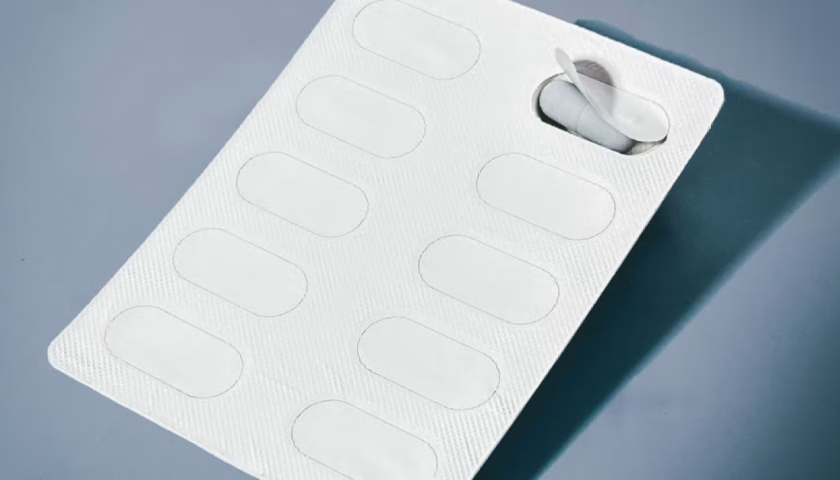
SWEDEN – Papela has joined the Blister Pack Collective as the initiative’s first converter partner, contributing expertise in nutraceutical, supplement and healthcare packaging to accelerate the development of recyclable dry moulded fibre blister packs alongside PA Consulting, PulPac and leading consumer health companies.
The Blister Pack Collective, established by PA Consulting and PulPac, brings together partners across the supply chain to develop fibre-based alternatives to traditional plastic blister packs that are difficult to recycle.
Papela’s participation adds practical converter insight into how fibre-based blister packaging can move closer to commercial adoption, strengthening a collective that already includes Haleon, Opella, Bayer Consumer Health and Sanofi Rx.
Industry Collaboration and Dry Moulded Fibre Technology
Papela founder and CEO Sander Volden stated that for many brands, the challenge is not only finding a more sustainable blister format but making the transition practical, adding that through the Blister Pack Collective, the company is working with PA and PulPac to help bring fibre-based blister packaging closer to market.
Dry moulded fibre is PulPac’s patented process for making packaging from renewable fibres through dry forming, with the technology having surpassed 500 national patent grants globally.
The process uses renewable pulp and cellulose resources to produce low-cost, high-performance fibre-based packaging with a significantly lower CO2 footprint.
What Papela’s Converter Expertise Means for Blister Packaging Development
The Blister Pack Collective’s approach is designed to accelerate learning and reduce barriers to innovation by bringing together partners with complementary expertise.
Papela adds a focused perspective on supplement applications as well as practical insight into how fibre-based blister packaging can move from development toward commercial adoption.
PA Consulting, PulPac and Papela will now work to further develop and validate dry moulded fibre blister packaging for selected supplement applications.
The initial proof of concept demonstrated a production speed of 10 metres per minute and is expected to achieve a 90 percent plastic reduction while maintaining parity with current plastic blister volumes.
PulPac COO Viktor Wingård Börjesson stated that Papela is bringing valuable market focus and a clear converter perspective to the initiative, helping explore how fibre-based blister packaging can meet specific product and market needs at scale.
The collective aims to provide a like-for-like, scalable solution for pharma and consumer healthcare companies to use recyclable fibre-based packaging instead of traditional non-recyclable PVC blister packs.
Subscribe to our email newsletters that provide busy executives like you with the latest news insights and trends from Africa and the World. SUBSCRIBE HERE
Be the first to leave a comment