

Tanzania’s environmental agency expands scope to households in waste management campaign
The Nemc Usafi Campaign 2025 will be anchored on a series of activities designed to inspire nationwide participation.
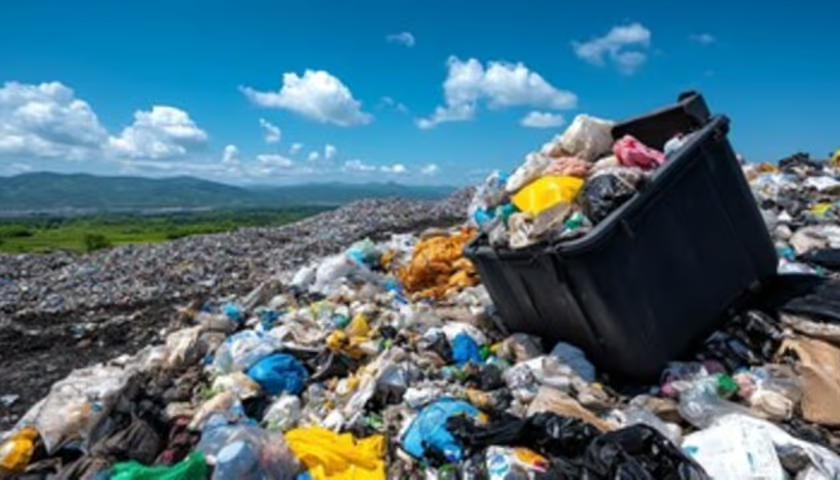
TANZANIA – The National Environment Management Council (NEMC) has launched the Nemc Usafi Campaign 2025, a nationwide drive to promote cleanliness, environmental conservation, and sustainable waste management across the country.
The initiative aims to mobilize at least 80% of households by December 2025 to actively participate in community cleanliness efforts.
By June 2026, the campaign also targets the establishment of environmental clubs in every primary and secondary school, alongside broader goals such as reducing indiscriminate waste disposal, boosting recycling, and creating green jobs.
Launched under the theme “Our Environment, Our Life – Let Us Protect It to Protect Ourselves,” the campaign is designed to deliver social, economic, and health benefits by fostering collective responsibility for environmental protection.
According to NEMC’s Director of Compliance and Enforcement, Mr. Janal Baruti, the country generates between 14.4 and 20.7 million tonnes of waste annually, equivalent to 0.66–0.95 kilograms per person per day or as much as 347 kilograms per person annually.
“For several years, Tanzania has been grappling with environmental pollution, driven mainly by the growing production of solid, plastic, and hazardous waste,” Baruti said
“This has resulted in outbreaks of disease, damage to infrastructure, degraded cityscapes, and disrupted marine and freshwater ecosystems.”
He stressed that the campaign’s success will rely on collaboration with the President’s Office – Regional Administration and Local Government (PO-RALG), regional secretariats, local government authorities, civil society organizations, and the private sector.
The Nemc Usafi Campaign 2025 will be anchored on a series of activities designed to inspire nationwide participation. A major component will be mass awareness campaigns delivered through traditional and social media, posters, leaflets, and public forums.
These outreach efforts aim to educate citizens on the importance of sanitation and mobilize them to take action in their communities.
At the practical level, the campaign will organize national clean-up operations targeting waste management challenges in both urban and rural areas.
By addressing clogged drains, unmanaged dumpsites, and littered public spaces, the initiative seeks to create cleaner, healthier environments for all.
To deepen community engagement, the program will include inter-school and ward-level competitions.
These contests are intended to foster a sense of pride and responsibility among young people and local groups, rewarding those who demonstrate outstanding commitment to maintaining cleanliness.
Environmental sustainability is another key pillar. The campaign will spearhead tree-planting drives and the creation of community green spaces, helping to restore ecosystems while improving the beauty and livability of neighborhoods.
In addition, the campaign will feature exhibitions of eco-friendly products, showcasing innovative solutions that encourage households and businesses to adopt more sustainable practices.
Through these combined efforts, Nemc Usafi Campaign 2025 aims to embed sanitation, environmental stewardship, and sustainability into the daily lives of citizens.
Mr. Baruti also called on development partners and businesses to contribute by providing equipment, training, educational materials, and incentives to boost public engagement and green entrepreneurship.
On medical waste, NEMC’s Manager for Legal Enforcement, Ms. Amina Kibola, noted that the Ministry of Health has issued guidelines requiring all hospitals to install burning chambers.
“The amount of medical waste has greatly reduced, and only a few hospitals may still lack these facilities,” she said, pointing to significant progress in the safe disposal of hazardous health-sector waste.
Officials say the Nemc Usafi Campaign 2025 is intended not only to instill a culture of household-level waste management but also to integrate environmental protection into education, governance, and business, building momentum toward a more sustainable future.
Subscribe to our email newsletters that provide busy executives like you with the latest news insights and trends from Africa and the World. SUBSCRIBE HERE


Be the first to leave a comment