

i2r launches aluminium tray that eliminates absorbent pads to improve recyclability
Innovative tray design integrates liquid retention into the packaging, reducing material use and supporting circular food packaging solutions.
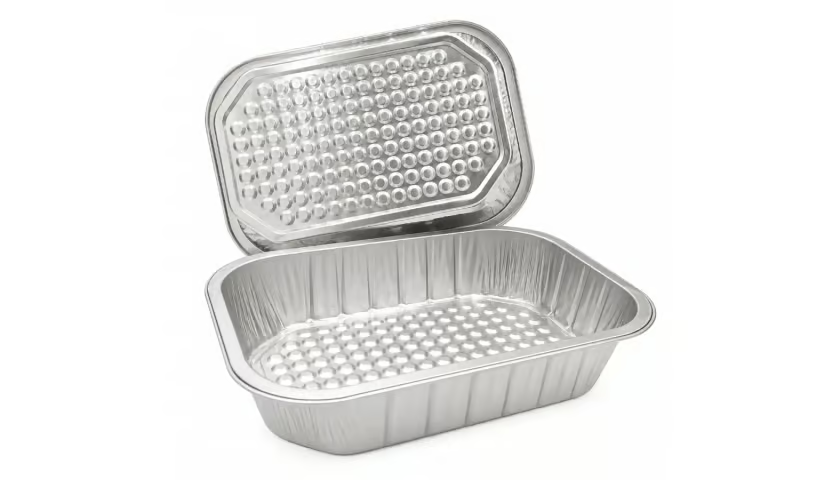
UK – i2r Packaging Solutions has introduced a new aluminium food tray designed to eliminate the need for traditional absorbent pads in fresh meat and seafood packaging, offering manufacturers a more recyclable and streamlined packaging solution.
The company’s new Dimple Base Tray features an engineered base that captures and retains liquid within the tray itself, combining the functions of both the conventional food tray and the absorbent soakaway pad into a single package.
According to i2r, performance testing showed the tray can retain up to 16ml of liquid—matching the absorption capabilities of conventional absorbent pads—while delivering approximately 30% greater strength than standard aluminium trays.
By removing the absorbent pad, which is often difficult to recycle because of its multi-material construction and food contamination, the company says the new design simplifies packaging, reduces waste and enhances recyclability.
Aluminium remains one of the world’s most widely recycled packaging materials, making it an attractive option for food manufacturers seeking to improve the circularity of their packaging while maintaining product protection and shelf-life performance.
The company added that its existing smoothwall aluminium trays already contain 54% recycled content and is targeting 90% recycled content across the range by the end of 2026.
Following the successful development of its initial Dimple Base profile, i2r plans to expand the technology into additional tray formats and other fresh food packaging applications.
“For decades, absorbent pads have been viewed as an essential part of fresh protein packaging,” said Tom Cliffe, Sales Director at i2r Packaging Solutions.
“We challenged that thinking by redesigning the tray itself, creating a solution that delivers the same performance while removing an unnecessary packaging component.”
He added that the innovation demonstrates how intelligent packaging design can simplify material structures while delivering sustainability benefits for manufacturers, retailers and consumers without compromising functionality.
The development reflects a broader trend within the food packaging industry toward mono-material and simplified packaging formats that are easier to recycle and generate less waste.
Manufacturers are increasingly redesigning packaging systems to eliminate unnecessary components while improving resource efficiency and meeting evolving circular economy objectives.
Earlier, i2r expanded its aluminium packaging portfolio with the launch of six recyclable trays for ready-to-cook foods under its B Series range, designed as an alternative to single-use plastic packaging.
Across the sector, innovation in fresh food packaging continues to accelerate. Sirane’s paper-based Earthpad absorbent pad has received recyclability approval, while Elliott Absorbent Products introduced its UniDry range, designed to reduce material usage and lower carbon emissions.
Meanwhile, Faerch and Norfersk have incorporated 70% food-grade recycled PET into meat trays, and seafood producer Flatlantic has adopted certified recycled expanded polystyrene (EPS) boxes from BEWI to reduce the carbon footprint of its seafood packaging.
These developments underscore the industry’s growing focus on designing food packaging that balances product protection, recyclability and reduced environmental impact through material innovation and smarter packaging design.
Subscribe to our email newsletters that provide busy executives like you with the latest news insights and trends from Africa and the World. SUBSCRIBE HERE

Be the first to leave a comment