

DePoly opens Swiss showcase plant to advance PET chemical recycling
New demonstration facility will validate depolymerization technology ahead of a planned 50,000-tonne commercial recycling plant.
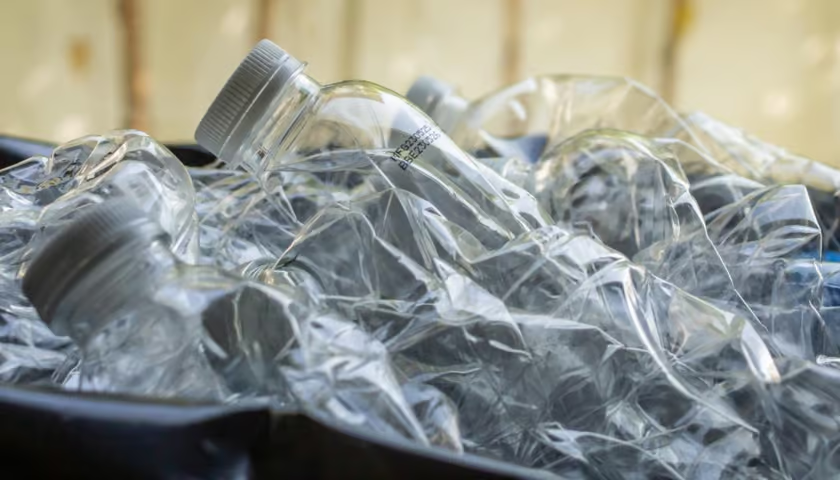
SWITZERLAND – Chemical recycling innovator DePoly has inaugurated a showcase plant in Monthey, Switzerland, marking a significant milestone in the commercialization of its proprietary PET recycling technology that converts plastic waste back into virgin-quality raw materials.
Described by the company as the first depolymerization facility of its kind and scale in Switzerland, the plant is designed to demonstrate DePoly’s ability to break down polyethylene terephthalate (PET) waste into its original chemical building blocks, enabling the production of high-quality feedstock suitable for all PET applications without compromising material performance.
The facility was officially inaugurated on July 6–7 in the presence of investors and industry partners, including Una Terra Venture Capital, Infinity, BASF and Beiersdorf, underscoring growing confidence in advanced recycling technologies capable of supporting circular packaging systems.
With a nominal processing capacity of approximately 500 tonnes of PET feedstock annually, the showcase plant will serve as a demonstration and validation hub where DePoly can optimize its recycling process, qualify recycled raw materials with industrial customers and generate operational data required for large-scale commercial deployment.
The project is expected to create 12 direct jobs and more than 30 indirect jobs in the region while strengthening Switzerland’s growing advanced recycling ecosystem.
According to DePoly, insights gained from the Monthey facility will support the development of its first full-scale commercial recycling plant, targeted to process 50,000 tonnes of PET waste per year.
The company expects to announce the location of the commercial facility during the first half of 2027.
The investment reflects accelerating momentum behind chemical recycling technologies as packaging manufacturers seek complementary solutions to conventional mechanical recycling for handling difficult-to-recycle plastics and producing food-grade recycled materials.
Across Europe, governments and private investors continue to increase support for advanced recycling infrastructure. Recently, the European Union’s Just Transition Fund awarded BlueAlp and LBC Tank Terminals a €1.5 million grant to advance the front-end engineering design (FEED) phase of a large-scale chemical recycling plant.
The project will assess technical feasibility, engineering design, logistics, permitting and financing ahead of commercial implementation.
Innovation is also accelerating in mechanical recycling. Plastipak recently introduced its pakPET Single Pellet Solution, a ready-to-use recycled PET resin designed to help packaging manufacturers increase recycled content while maintaining product quality, processing consistency and manufacturing efficiency across beverage, food, personal care and thermoforming applications.
As regulatory pressure intensifies and demand for recycled content continues to grow, investments in both chemical and mechanical recycling technologies are expanding rapidly.
Industry stakeholders increasingly view multiple recycling pathways as essential to achieving circular economy goals, reducing dependence on virgin fossil-based plastics and meeting ambitious recycled-content targets across the packaging value chain.
Subscribe to our email newsletters that provide busy executives like you with the latest news insights and trends from Africa and the World. SUBSCRIBE HERE
Be the first to leave a comment