

DNP launches thermal transfer ribbons for pharma, food packaging
Launch extends DNP thermal transfer into compliance/operating-driven applications, serving converters and printers in regulated markets.
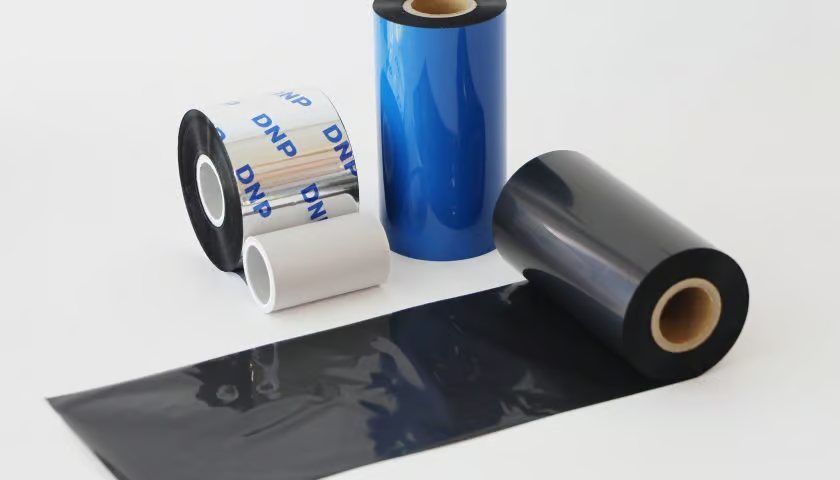
USA – DNP Imagingcomm America Corporation has introduced two thermal transfer ribbons designed for durable printed identification and barcode readability, targeting healthcare, pharmaceutical and food packaging applications.
The R380 Alcohol-Resistant Resin is a flat-head thermal transfer ribbon formulated to withstand exposure to isopropyl alcohol and ethanol.
Designed for labels subjected to repeated cleaning, sanitisation and handling, the ribbon also provides heat and scratch resistance. The formulation is compatible with PET, polyimide and PVC label materials.
DNP is targeting applications including medical device labelling, pharmaceutical manufacturing, healthcare products and laboratory identification, where printed information and barcodes must remain legible following exposure to disinfectants and sanitising agents.
Legibility matters because pharmaceutical labelling carries strict traceability obligations that regulators audit, and degraded batch codes undermine recall procedures.
V670 Ribbon Handles Grease and Temperature Extremes
The V670 High-Performance TTO Resin is a thermal transfer overprint ribbon developed for printing production codes, lot numbers, expiration dates and barcodes on food and flexible packaging.
The resin formulation provides resistance to grease, cooking oils and temperature extremes encountered during processing, distribution and storage.
The ribbon can print on paper, PET and various poly-based packaging substrates and is designed to maintain coding performance during both hot processing and cold storage.
Date codes and lot numbers on food packaging must stay readable through cooking, freezing and transit, since illegible codes force rework and risk non-compliant product entering distribution.
Durability Demands Rise Across Regulated Sectors
Pharmaceutical and food manufacturers face tightening requirements on coding durability as supply chains lengthen and audit trails deepen.
Standard wax-resin ribbons frequently fail under sanitisation protocols or extreme temperature exposure, generating rejected packs and unplanned line stoppages.
Ribbon selection therefore directly affects scanner readability, rejection rates and throughput on high-speed coding equipment.
Leadership Cites Sector-Specific Challenges
Shinichi Yamashita, president of DNP Imagingcomm America Corporation, said today’s manufacturing environments demanded more from labelling and coding technologies than ever before.
He added that the products addressed specific durability and readability challenges faced by healthcare and food manufacturers.
Both products are available beginning 7 October.
The launch extends DNP’s thermal transfer portfolio into applications where performance thresholds are set by regulatory compliance and operating conditions rather than print speed alone, positioning the company to serve converters and packaging printers supplying regulated end markets.
Subscribe to our email newsletters that provide busy executives like you with the latest news insights and trends from Africa and the World. SUBSCRIBE HERE

Be the first to leave a comment