

BIR report confirms Türkiye’s dominance in global scrap steel trade
BIR data shows Türkiye’s recycled steel consumption rose 4.8% during the period, while crude steel production increased 8.1%.
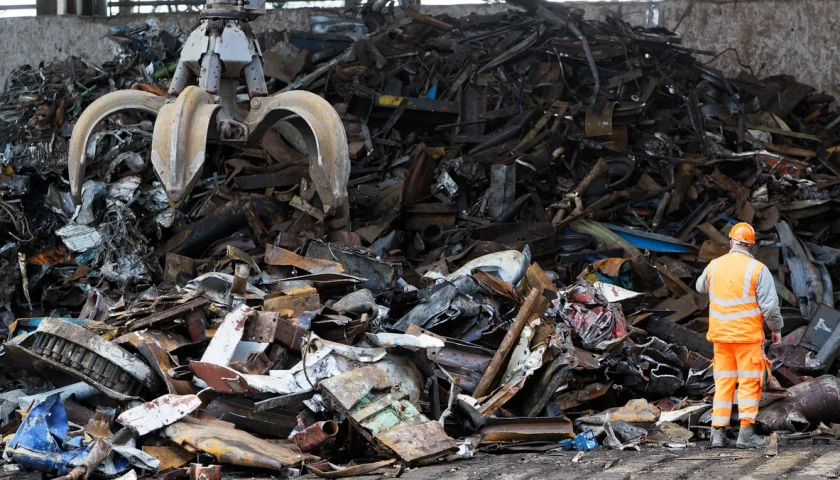
TÜRKİYE – Türkiye’s steel mills purchased 9.696 million tonnes of recycled steel from international markets in H12026, a 3.1% year-on-year increase that cements the country’s status as the world’s largest importer of ferrous scrap, according to the Bureau of International Recycling.
The United States remained the single largest source of recycled steel for Turkish mills, shipping 1.773 million tonnes, a 2.9% increase.
The Netherlands followed at 1.202 million tonnes despite a 20% decline, while the United Kingdom supplied 1.117 million tonnes, up 20.8%.
Romania emerged as a significant contributor with 749,000 tonnes, representing a 56.8% surge, and Belgium rounded out the top five with 739,000 tonnes.
This diversified sourcing strategy protects Turkish producers from over-reliance on any single market, particularly as European export policies and domestic scrap retention efforts evolve.
Domestic Steel Output Reflects Scrap Dependency
The BIR data shows recycled steel consumption in Türkiye increased by 4.8% during the period, while crude steel production rose 8.1%.
The correlation highlights the structural reliance of the Turkish steel industry on electric arc furnace technology, which uses scrap as its primary feedstock.
Unlike blast furnace operations that depend on iron ore and coal, electric arc furnaces can flexibly adjust to scrap availability and pricing, but they require consistent, high-quality input to maintain production efficiency and output quality.
2025 Figures Underscore Long-Term Import Leadership
Türkiye maintained its position as the world’s largest recycled steel importer in 2025, purchasing 18.76 million tonnes from overseas suppliers.
Despite a 20.4% decline in US exports to Türkiye, the United States remained the largest source country with 3.6 million tonnes, followed by the Netherlands with 2.76 million tonnes.
The sustained leadership across multiple periods indicates that domestic collection infrastructure cannot meet the volume requirements of the country’s steelmaking capacity, making imports essential to maintain output levels.
European Export Flows Concentrate on Turkish and Egyptian Markets
The main destinations for European scrap exports were Türkiye, which recorded a slight decline of 0.9% to 10.8 million tonnes, and Egypt, which increased 13.4% to 1.9 million tonnes.
This concentration reflects regional supply chain integration, where short-sea freight economics favour Turkish and North African destinations over longer ocean routes to Asia.
For packaging manufacturers reliant on steel for cans, closures and industrial containers, scrap market dynamics in Türkiye directly influence regional metal availability and pricing.
Subscribe to our email newsletters that provide busy executives like you with the latest news insights and trends from Africa and the World. SUBSCRIBE HERE

Be the first to leave a comment