

Eswatini joins US$60M programme to scale electronics recycling
The programme backs policies, financing, and technology for sustainable electronics value chains, while promoting repair/reuse for longer lifespans and better collection, recovery, and sound recycling.
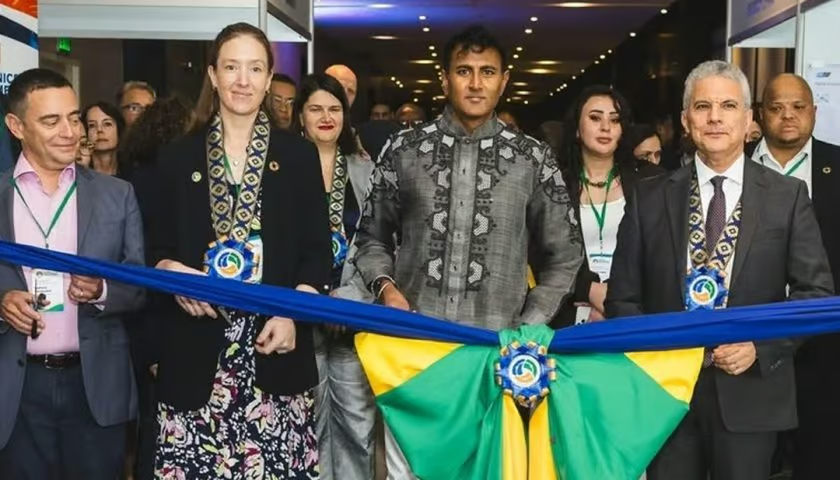
ESWATINI – Eswatini has been selected among 16 countries to participate in a US$60 million (E1.04 billion) international programme aimed at promoting sustainable electronics recycling, strengthening recovery systems and advancing the circular economy.
The Global Electronics Management Programme, launched in Manila, Philippines, on 7 October 2026, is backed by the African Development Bank Group and other international development partners.
It seeks to transform how electronic products are manufactured, used, repaired, reused, collected and recycled.
The urgency is clear: in 2022, the world generated 62 million tonnes of e-waste, but only 22.3% was formally collected and recycled in an environmentally sound manner.
Global e-waste generation is projected to reach 82 million tonnes by 2030, highlighting the critical need for robust recycling infrastructure.
African Nations Form Core Recycling Cohort
Eswatini is among nine African countries selected for the first phase, alongside Botswana, Djibouti, Ethiopia, Lesotho, Mozambique, Namibia, Somalia and South Africa.
The other participating countries are Cambodia, Colombia, Kazakhstan, Peru, the Philippines, Türkiye and Vietnam.
According to the African Development Bank, the participating African countries were selected through two regional projects.
Djibouti, Ethiopia and Somalia fall under a Horn of Africa project, while Botswana, Eswatini, Lesotho, Mozambique, Namibia and South Africa are included under a Southern Africa/SADC project implemented by the United Nations Environment Programme.
Funding Structure and National Allocation
The programme’s total funding of US$60 million translates to approximately E1.04 billion, using an indicative exchange rate of E17.30 to the US dollar.
This represents overall programme funding, not an amount confirmed as allocated directly to Eswatini.
The announcement does not specify the funding directed to the Kingdom, the local projects, or the timetable.
The initiative is funded by the Global Environment Facility and led by the United Nations Industrial Development Organization, in partnership with the African Development Bank Group, the United Nations Development Programme and UNEP.
Capacity Building for Circular Value Chains
For Eswatini, participation creates an opportunity to strengthen approaches to electronic waste management, promote resource recovery and support environmentally responsible disposal and recycling practices.
The programme will support the development of policies, financing mechanisms and the adoption of technologies needed to establish sustainable electronics value chains.
It will also encourage longer product lifespans through repair and reuse, while improving collection, recovery and environmentally sound recycling.
Smail Alhilali, director of the Circular Economy and Green Industry Division at UNIDO, said the transition to circular electronics required coordinated action involving countries, industry, finance, technology and knowledge to build effective recycling partnerships.
Subscribe to our email newsletters that provide busy executives like you with the latest news insights and trends from Africa and the World. SUBSCRIBE HERE
Be the first to leave a comment