

Future Market Insights forecasts MENA industrial packaging hitting US$11.4B by 2036
Tied to national diversification strategies across the Gulf and North Africa, this growth comes as petrochemicals, food processing, and pharmaceuticals expand, raising the need for specialised packaging.
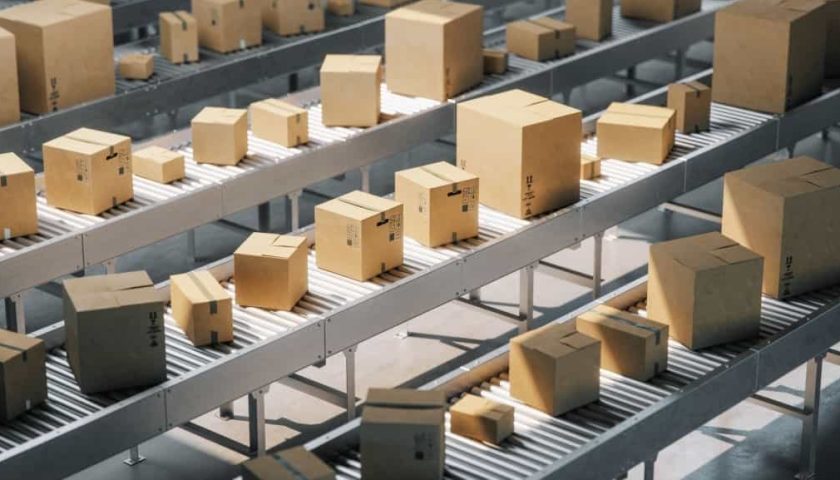
MENA – Future Market Insights projects the MENA industrial packaging market will double from US$5.9 billion in 2026 to US$11.4 billion by 2036, a 6.8% compound annual growth rate driven by heavy industry and logistics expansion.
Plastic pallets have emerged as the dominant product category, capturing 32.9% of the market in 2026.
This preference reflects a regional shift toward reusable logistics assets that survive harsh climates, resist moisture and support automated warehousing.
Rigid packaging formats follow closely, accounting for 55.5% of the market, as chemical, petrochemical and food processors require durable containers for bulk transport and extended outdoor storage.
The reliance on rigid formats indicates that MENA’s packaging demand is heavily weighted toward industrial inputs rather than consumer-facing secondary packaging.
Growth Outpaces Mature Western Markets
Future Market Insights notes that regional growth outpaces mature markets, citing the United States at 6.4% and the United Kingdom at 5.8%.
However, MENA trails faster-expanding Asian economies like China at 9.1%.
This positioning suggests the region is in a transition phase, moving from basic infrastructure build-out to more sophisticated manufacturing, which requires higher-specification packaging for specialized goods.
Germany’s 7.7% rate highlights the benchmark for advanced industrial packaging, a level MENA is steadily approaching as it localizes production.
Inference: Localization Will Reshape Supply Chains
The projected growth implies a significant shift in how packaging is sourced.
Currently, many high-performance industrial containers and pallets are imported from Europe or Asia.
As regional demand scales toward US$11.4 billion, localizing production becomes economically viable.
We can infer that free zones and industrial cities in the Gulf will attract packaging manufacturers seeking to reduce freight costs and lead times, turning the region from a net importer into a regional production hub.
Trade Corridors and Diversification Drive Demand
The growth is tied to national diversification strategies across the Gulf and North Africa. As petrochemicals, food processing and pharmaceuticals expand, the need for specialized packaging rises.
The expansion of port infrastructure and logistics corridors means packaging must perform across multimodal transport, from ship to rail to truck.
This creates demand for packaging that optimizes space, reduces weight, and maintains product integrity over long distances.
The market’s trajectory suggests industrial packaging will remain a critical enabler of the region’s broader economic transition.
Subscribe to our email newsletters that provide busy executives like you with the latest news insights and trends from Africa and the World. SUBSCRIBE HERE
Be the first to leave a comment