

India blocks lithium-ion battery waste exports to keep metals in domestic recycling
Aligned with circular economy principles, the policy has used batteries dismantled and processed domestically to recover critical minerals, reducing imported raw material needs.
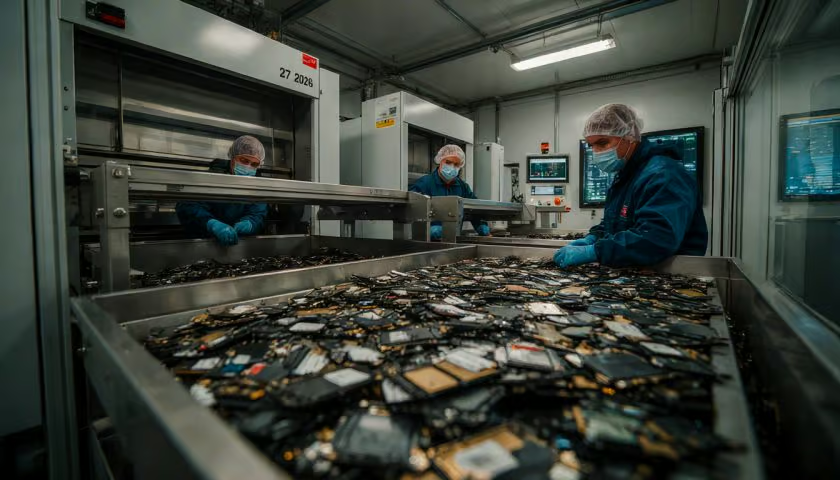
INDIA – The government has stopped the export of lithium-ion battery waste and black mass, a move that forces critical minerals to stay inside the country for local recycling and cuts reliance on foreign processing.
The Directorate General of Foreign Trade changed the export status for waste and scrap of primary cells, batteries, and electric accumulators under HS Code 85491400 from “free” to “prohibited” with immediate effect.
The restriction targets lithium-ion battery black mass, the shredded material left after batteries are broken down, which holds high concentrations of lithium, nickel, cobalt, and manganese.
Keeping this material in the country stops those metals from being refined overseas and leaves them available for local recyclers to process.
Cabinet Backs Domestic Processing with US$29.7M
The export ban comes alongside a major funding push to get domestic plants built. The Union Cabinet approved a ₹2,814 crore (US$29.7 million) capital support scheme to grow critical mineral processing over five years, from FY27 to FY31.
The scheme offers a 30% capital subsidy for setting up four plants, including two lithium facilities with at least 30 kilotonnes of capacity each and two nickel plants at 50 kilotonnes each.
This financial support is meant to make it easier and less risky for companies to invest in the expensive machinery needed to recover metals at scale.
Closing the Loop on Battery Materials
Lithium-ion black mass is a valuable secondary resource, but shipping it out weakens India’s energy security and recycling goals.
The new policy lines up with a circular economy approach, ensuring that used batteries are torn down and processed at home to pull out critical minerals.
That reduces the need to buy raw materials from abroad and gives a real reason for a local battery recycling industry to grow.
Industry Faces Transition
Moving to a fully domestic recycling model will not happen overnight. It will require scaling up collection networks and adopting processing technologies that can compete on cost.
Recyclers and manufacturers now have a clear signal that the future of battery waste sits inside India.
The scheme’s success will hinge on whether the industry can secure enough scrap to feed new plants and deploy the right technology to pull minerals out profitably.
Subscribe to our email newsletters that provide busy executives like you with the latest news insights and trends from Africa and the World. SUBSCRIBE HERE
Be the first to leave a comment