

India flexible packaging market to reach US$58.29B by 2035: Market Research Future
FMCG growth in urban/rural India drives sachets, pouches, lightweight packs—especially in Tier-2/3 cities where affordability rules.
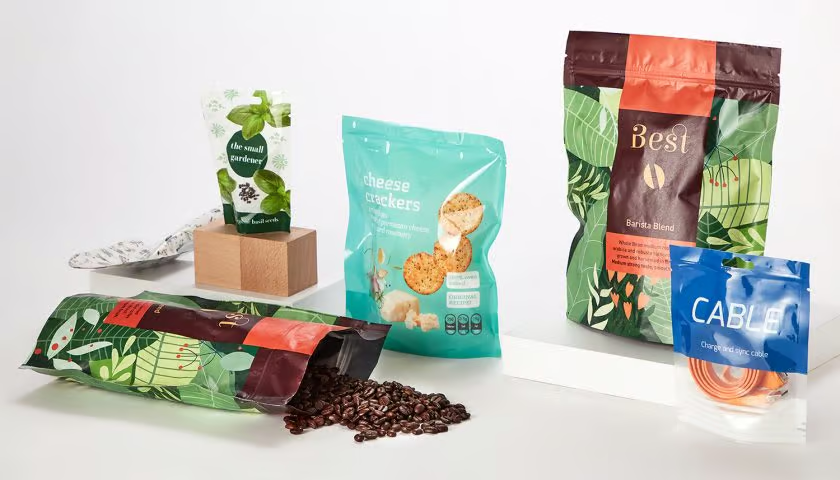
INDIA – India’s flexible packaging market is projected to grow from US$21.84 billion in 2025 to US$58.29 billion by 2035, registering a compound annual growth rate of 10.32 percent, according to Market Research Future.
The strongest growth driver remains the continued expansion of the fast-moving consumer goods sector across urban and rural India.
Single-serve sachets, stand-up pouches and lightweight formats have gained popularity as companies extend distribution into Tier-2 and Tier-3 cities, where affordability and small pack sizes determine purchasing decisions.
Flexible packaging refers to solutions made from lightweight, non-rigid materials including plastic films, paper and aluminium foil, converted into pouches, bags, wraps and laminated structures offering convenience, reduced material usage and lower transport costs compared with rigid alternatives.
E-Commerce Demand Favours Durable Lightweight Formats
Rapid growth in e-commerce and quick-commerce platforms is generating significant demand for durable, lightweight packaging capable of protecting products during fast delivery operations.
Grocery delivery services, direct-to-consumer brands and online retail continue increasing the need for innovative flexible formats.
These channels impose requirements distinct from traditional retail, including puncture resistance, tamper evidence and compatibility with automated packing systems, all while minimising dimensional weight to control shipping costs.
Regulation and Sustainability Reshape Material Choices
Government initiatives promoting domestic manufacturing, combined with Extended Producer Responsibility regulations for plastic packaging waste, are encouraging manufacturers to invest in recyclable and sustainable packaging technologies.
Sustainability has become one of the most important trends shaping the industry, with producers increasingly developing mono-material recyclable laminates, paper-based alternatives and lightweight structures that reduce environmental impact while maintaining product protection.
Mono-material designs address a longstanding barrier in flexible packaging, where multi-layer laminates bond incompatible substrates that cannot be separated economically during recycling.
Packaging Sector Benefits from Consumption Shift
The market is benefiting from India’s growing population, rising disposable incomes, an expanding organised retail sector and increasing consumption of packaged food, beverages, pharmaceuticals and personal care products.
As brands focus on convenience, product safety and sustainability, flexible packaging has become essential to modern manufacturing and retail operations.
The projected expansion reflects structural shifts in Indian consumption rather than cyclical demand, with organised retail penetration and packaged food adoption continuing to rise across income segments.
Converters investing in recyclable formats and domestic capacity stand to capture value as brands seek suppliers capable of meeting both regulatory requirements and cost targets in a price-sensitive market.
Subscribe to our email newsletters that provide busy executives like you with the latest news insights and trends from Africa and the World. SUBSCRIBE HERE
Be the first to leave a comment