

India proposes wider recycled plastic use in food packaging
The draft regulation signals wider recycled-material scope beyond PET for food delivery platforms and converters, potentially cutting virgin polymer reliance across more food-contact formats.
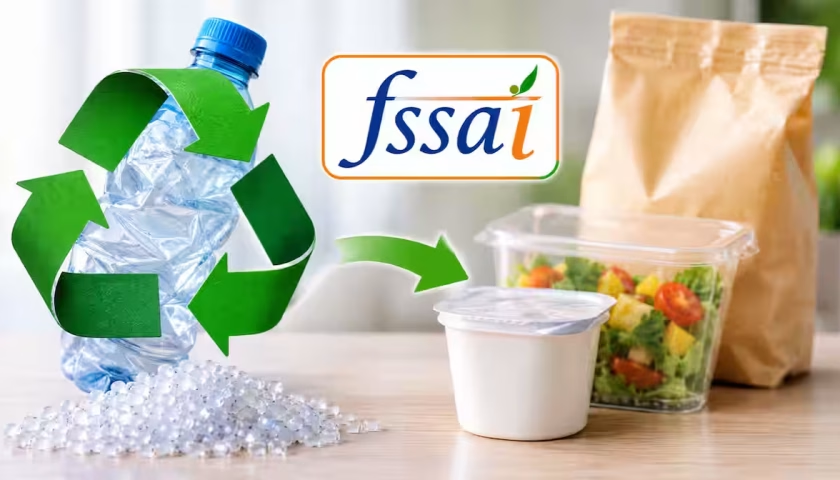
INDIA – The Food Safety and Standards Authority of India has issued draft regulations to permit wider use of recycled plastic in food-contact packaging, allowing chemically recycled polyethylene and polypropylene through the monomer route and recycled polymers in the outermost layer of multilayer formats.
The Draft Food Safety and Standards (Packaging) Amendment Regulations, 2026, issued on 2 November, amend the 2018 Packaging Regulations to permit chemically recycled polyethylene and polypropylene through the monomer route for food-contact materials, provided the recycled output is equivalent to virgin material and complies with applicable standards.
Recycled polymers derived exclusively from food-grade packaging materials are also permitted in the outermost layer of multilayer food packaging, subject to adequate barrier protection in inner layers to prevent migration of substances into food and compliance with prescribed migration limits.
Objections and suggestions may be submitted within 60 days from 3 November 2026.
Regulatory Shift Builds on PET Precedent
The proposal extends a regulatory pathway already established for polyethylene terephthalate.
In March 2025, the authority amended the Packaging Regulations to permit recycled PET for food packaging, storage and distribution, subject to notified standards and guidelines.
By opening polyethylene and polypropylene to recycled content, the draft regulation broadens the material base available to food and beverage brand owners seeking compliant recycled packaging.
Recycled Content Mandates Drive Demand
The regulatory change arrives as India’s Plastic Waste Management Rules impose escalating recycled-content obligations on rigid plastic packaging.
Category I rigid packaging, including beverage bottles and trays, must contain 30 percent recycled content in 2025-26, rising to 40 percent in 2026-27, 50 percent in 2027-28 and 60 percent from 2028-29.
The Environment Ministry has permitted shortfalls from the 2025-26 target to be carried forward for up to three years, with at least one-third of any deferred requirement met annually.
Recycling Capacity Expands to Meet Compliance
Food-grade recycled PET capacity has expanded alongside the mandates.
The Food Safety and Standards Authority authorised 17 recycled PET manufacturing plants in March 2026, unlocking an estimated 300,000 tonnes of annual capacity.
The Association of PET Recyclers Bharat has stated that installed capacity is sufficient to meet the 40 percent requirement for 2026-27, with expansion expected to reach approximately 750,000 tonnes by March 2027.
For food delivery platforms and packaging converters, the draft regulation signals a widening scope for recycled materials beyond PET, potentially reducing reliance on virgin polymers across a broader range of food-contact formats.
Subscribe to our email newsletters that provide busy executives like you with the latest news insights and trends from Africa and the World. SUBSCRIBE HERE
Be the first to leave a comment