

McDonald’s Netherlands faces US$4.4M penalty over single-use cup breaches
A spokesperson said McDonald’s Netherlands, subject to a penalty order, informed the inspectorate that it considers its single-use plastics implementation aligned with the legislation’s objectives.
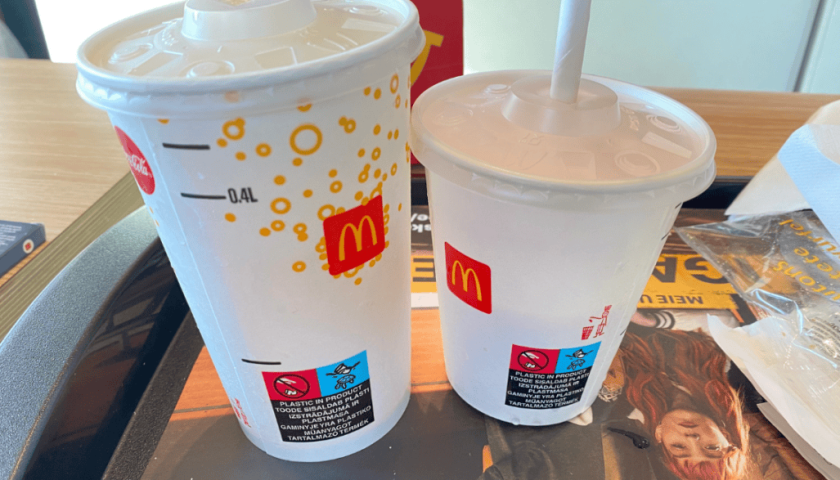
NETHERLANDS – McDonald’s Netherlands has been ordered to comply with Dutch single-use plastics rules by January 5, 2027, or face penalty payments reaching €3.75 million (US$4.4 million) following a regulatory investigation.
The Human Environment and Transport Inspectorate conducted inspections at 32 McDonald’s locations during 2026 and determined that the fast food operator had been offering single-use cups for on-site consumption since 2024.
Dutch Regulation on Single-Use Plastic Products, which implements the European Union’s Single-Use Plastics Directive, requires foodservice establishments to either provide reusable cups for dine-in service or collect disposable cups for recycling.
Investigators concluded that McDonald’s Netherlands had neither collected single-use cups for recycling nor maintained records of disposable plastic usage, both prerequisites for claiming the recycling exemption.
Enforcement Order Sets Staged Penalty Structure
The enforcement order provides a transition period, with compliance required by January 5, 2027.
Should violations persist beyond that date, McDonald’s Netherlands would incur penalties of €625,000 (US$726,059) per breach, capped at €3.75 million (US$4.4 million).
The inspectorate has indicated it will resume compliance checks in January 2027 to verify adherence to the company’s commitments and Dutch law.
Company Cites Overlapping Dine-In and Takeaway Behaviour
A McDonald’s Netherlands spokesperson said the company had received an order subject to penalty payment and had informed the inspectorate that, in its view, it was implementing single-use plastics legislation in line with its underlying objectives of reducing plastic use and lowering environmental impact.
The spokesperson noted that dine-in and takeaway consumption frequently overlap in quick-service restaurants, with guests who initially consume drinks on-site often deciding to take them away afterward.
The company argued that current rules do not always reflect consumer behaviour or deliver intended environmental benefits, and that low return rates for reusable cups can lead to higher plastic volumes.
Advocacy Group Seeks Sector-Wide Precedent
Chloé Schwizgebel, project coordinator at the Fair Resource Foundation, said she wanted the decision to set a precedent for other fast food sector players and expressed expectation that it would help ensure foodservice companies affected by the ban work toward effective application of the rule.
The foundation conducted its own investigation before alerting the inspectorate, visiting 12 restaurants after being alerted by low average numbers of reusable cups for dine-in compared with French operations.
Schwizgebel argued that the largest quick-service chain in the country had deliberately designed a confusing reuse system and then blamed the concept of reuse for its ineffectiveness, noting that most major Dutch quick-service players already operate better-designed reuse systems.
Subscribe to our email newsletters that provide busy executives like you with the latest news insights and trends from Africa and the World. SUBSCRIBE HERE

Be the first to leave a comment