

BEWI’s 40,000T EPS recycling loop delivers 30% carbon cut for Portuguese Flatfish Packaging
The adoption aligns with Flatlantic’s model of controlling the entire fish lifecycle, keeping flatfish alive until orders are placed to ensure maximum freshness while reducing food waste.
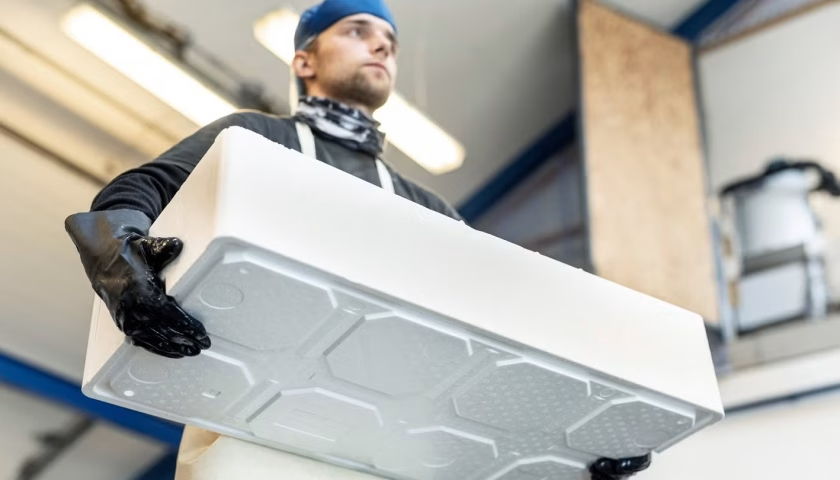
PORTUGAL – Portuguese flatfish producer Flatlantic has adopted fish transport boxes made from Certified Recycled EPS supplied by BEWI, securing a 30 percent reduction in carbon footprint while maintaining food safety and thermal insulation performance through recycled expanded polystyrene material.
The boxes are produced using a combination of recycled and virgin feedstock, with third-party certification ensuring the material’s properties are allocated to the most suitable applications.
BEWI’s Circular division collects approximately 40,000 tonnes of used EPS annually, converting it into recycled general-purpose polystyrene raw material that feeds back into new product manufacturing.
The adoption aligns with Flatlantic’s model of controlling the entire fish lifecycle, keeping flatfish alive until orders are placed to ensure maximum freshness while reducing food waste.
How Certified Recycled EPS Maintains Food Safety While Cutting Carbon
BEWI’s circular process begins with collection of used EPS fish boxes from supermarkets, fish markets and logistics centers, which are washed, compacted and granulated into pellets at recycling facilities.
The recycled feedstock is allocated through a mass balance approach, enabling its use in food-contact packaging without compromising safety standards.
Laura Roque, Environmental Manager at Flatlantic, said that with excellent thermal insulation and durability, EPS packaging is the best solution for transporting fresh fish, and boxes of Certified Recycled EPS reduce virgin raw material use while lowering the environmental footprint of operations.
The boxes deliver the same performance and quality standards as virgin EPS, securing food-safe handling throughout the cold chain.
What 30% Carbon Reduction Means for EU Packaging Compliance and Plastic Taxes
BEWI ASA CEO Christian Bekken said that providing customers with circular solutions has long been a priority for BEWI.
He explained that with Certified Recycled EPS, companies can increase recycled content in packaging and reduce waste, which can result in avoidance of plastic taxes while meeting the requirements of the Packaging and Packaging Waste Regulations.
The adoption positions Flatlantic within the NATURA network as a “Seastainable Flatfish Village” that integrates environmental responsibility across its operations.
BEWI’s recycled grey EPS innovations have also achieved up to 52 percent lower CO2 footprint for insulation boards, demonstrating the scalability of the company’s circular model across packaging and construction sectors.
Subscribe to our email newsletters that provide busy executives like you with the latest news insights and trends from Africa and the World. SUBSCRIBE HERE
Be the first to leave a comment