

India’s 60% rigid packaging recycling mandate targets rPET, rHDPE demand growth for PIBOs
The policy is also expected to encourage improvements in material traceability through mandatory QR code or barcode labelling for plastic packaging.
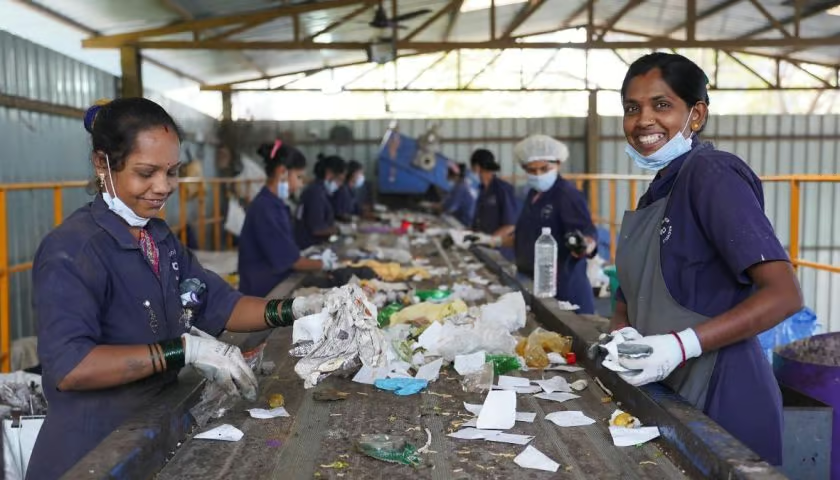
INDIA – India has mandated rising recycled content for rigid plastic packaging under its EPR framework, starting at 30% in 2025-26 and climbing to 60% by 2028-29, driving demand for food-grade rPET and rHDPE from over 44,000 registered PIBOs.
The recycled content targets apply to Category I rigid plastic packaging, including PET bottles, HDPE jars and containers, under the Plastic Waste Management Rules.
The phased approach requires minimum recycled content of 40% in 2026-27, 50% in 2027-28 and 60% from 2028-29 onwards.
All recycled plastic packaging must comply with Indian Standard IS 14534:2023 and bear appropriate labeling to indicate recycled content.
Regulatory Framework and Compliance Requirements
The EPR framework, established under the Plastic Waste Management Rules, 2016 and amended in 2022 and 2026, requires PIBOs to register on the Central Pollution Control Board’s online EPR portal.
Over 44,659 producers, importers and brand owners have registered for plastic packaging waste.
The mandatory recycled content obligation applies to packaging manufacturers, brand owners and importers, with multi-layered packaging limited to considering only the plastic layers in calculating recycled content.
Market Impact and Recycling Infrastructure Investment
The mandate is expected to create robust demand for high-quality recycled polymers such as rPET and rHDPE.
Approximately 15-18 food-grade rPET recycling facilities have been established across India with a total capacity of about 300,000 metric tonnes at an estimated investment of ₹9,000-10,000 crore (US$1.08-1.20 billion), adopting state-of-the-art technology and standards approved by the European Food Safety Authority and the US Food and Drug Administration.
However, the Indian Association of PET Recyclers has warned that brands are delaying compliance, causing most PET recycling plants to operate well below capacity.
The policy is also expected to encourage improvements in material traceability through mandatory QR code or barcode labelling for plastic packaging.
Packaging design is expected to evolve as manufacturers develop products that are easier to collect, sort and recycle.
India’s packaging market position makes this policy significant for international suppliers, who may need to review material sourcing and manufacturing strategies to meet the new requirements.
Subscribe to our email newsletters that provide busy executives like you with the latest news insights and trends from Africa and the World. SUBSCRIBE HERE
Be the first to leave a comment