

PixelJet debuts water-based digital press for corrugated at Mumbai Expo
The launch lands amid sustained kraft paper price hikes in India’s corrugated packaging sector, where thousands of SME converters face squeezed margins and working capital strain.
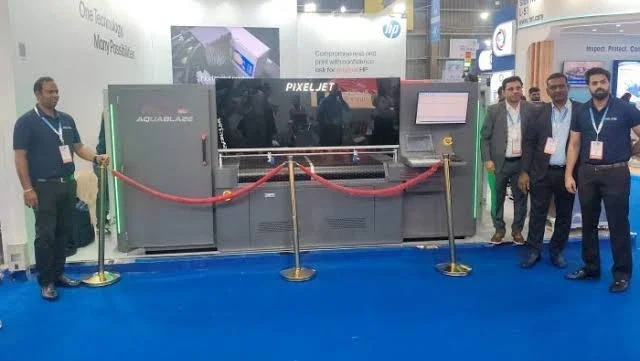
INDIA – PixelJet unveiled the Aquablaze digital press at Anuga FoodTech 2026 in Mumbai, a water-based printing platform aimed at corrugated packaging producers serving food and consumer goods customers.
The system runs on water-based inks rather than ultraviolet-curable formulations.
That distinction carries weight in corrugated applications tied to food and beverage packaging, where UV chemistries bring photoinitiators and reactive monomers under regulatory scrutiny, alongside concerns about residual odour in printed board.
Aqueous inks also sit more comfortably alongside fibre recovery, since printed board with compatible ink chemistry can move through paper recycling streams without the contamination issues associated with some conventional coatings.
Converters supplying fresh produce trays, dry food cartons and hygiene-sensitive packaging stand to benefit most from this chemistry profile.
Short Runs Become Economically Viable
Printing digitally onto corrugated board removes the plate-making, mounting and setup expenditure required for flexographic production.
That changes the economics of small batches, making seasonal promotions, limited editions, regional variants and e-commerce packaging with variable messaging feasible where conventional print runs would be cost-prohibitive.
Removing tooling from the workflow also compresses the gap between artwork sign-off and finished packaging, a benefit for food producers working to tight promotional deadlines.
Digital output additionally supports versioning within a single order, allowing retailers to receive region-specific or language-specific packaging without separate print runs.
Indian Corrugated Sector Faces Margin Pressure
The launch lands as India’s corrugated packaging industry absorbs sustained kraft paper price increases, with thousands of small and medium converters reporting squeezed margins and working capital constraints.
Digital output gives converters a path toward higher-value work without committing to large conventional print volumes, improving returns on order profiles that flexo equipment handles inefficiently.
For smaller converters lacking capital for additional flexo lines, digital presses can extend service ranges without proportional investment in plates, cylinders and make-ready labour.
Food Sector Venue Signals Market Intent
PixelJet chose a food processing and packaging exhibition rather than a general print trade show, indicating an intent to reach packaging buyers directly, including food manufacturers assessing near-line or in-house print capability.
For producers serving food and beverage brands, water-based digital printing addresses both regulatory expectations around food-contact materials and rising demand for rapid, customised short-run production.
The approach reflects a broader shift in corrugated printing, where digital systems increasingly complement rather than replace flexo lines, handling the short and variable work that conventional equipment cannot run profitably.
Subscribe to our email newsletters that provide busy executives like you with the latest news insights and trends from Africa and the World. SUBSCRIBE HERE

Be the first to leave a comment