

Arab League adopts ADR protocol for dangerous goods packaging, transport
The protocol requires manufacturers to align packaging specifications, classification and labelling with ADR standards for hazardous goods.
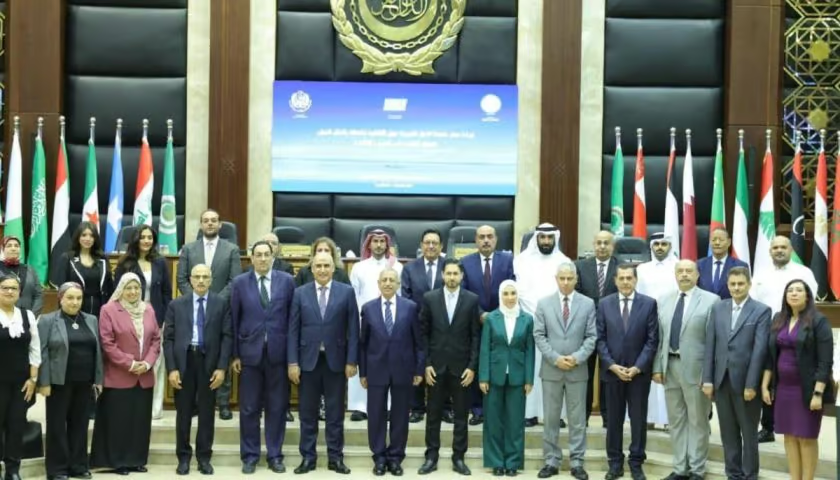
EGYPT – The Council of Arab Transport Ministers has unanimously adopted the IRU-proposed ADR protocol during its 39th summit in Alexandria, harmonising procedures for the transport of dangerous goods by road across all 22 Arab League member states, including the classification, packaging and labelling of hazardous materials.
The protocol, aligned with the United Nations ADR agreement, aims to improve road safety, reduce risks and strengthen security measures to prevent misuse.
It will also strengthen regulatory frameworks, establish professional qualification requirements for key industry actors and promote environmental responsibility.
The ADR agreement, established in 1957, sets international standards for the classification, packaging and transport of dangerous goods, and has been adopted by 54 countries.
Harmonisation Addresses Regional Safety Gap
The absence of a harmonised process for the transport of dangerous goods puts people and the environment at significant risk.
The adoption came as a direct response, paving the way for harmonisation of procedures based on internationally recognised standards across the Arab region.
For manufacturers and distributors of chemicals, petroleum products and hazardous industrial materials, a unified approach removes the need to navigate differing national packaging requirements, which have historically increased costs and complicated cross-border logistics.
Packaging and Labelling Standards Central to Framework
The protocol’s scope covers packaging requirements alongside classification and labelling, meaning manufacturers will need to align packaging specifications with ADR standards for hazardous goods.
The agreement also addresses driver training, safety advisers and vehicle technical requirements.
Packaging formats for dangerous goods must meet stringent performance criteria, including drop testing, stacking resistance and leak-proof construction, and certification typically requires testing at approved facilities before products can be placed on the market.
IRU Workshop Explores National Alignment
In partnership with the United Nations Economic Commission for Europe, IRU worked with ADR’s founding contracting parties to conceive, draft and develop the agreement, while also raising awareness and supporting its implementation in commercial road transport services.
IRU organised an ADR workshop on the sidelines of the Arab transport ministers’ meeting, bringing together regional representatives to explore ADR’s structure, scope and practical benefits.
The workshop examined how Arab states can align national legislation with international best practices, drawing on experience from the European Union and other regions, and explored a roadmap toward accession to ADR.
Subscribe to our email newsletters that provide busy executives like you with the latest news insights and trends from Africa and the World. SUBSCRIBE HERE

Be the first to leave a comment