

CoRe Alliance demands nationwide EPR framework to overhaul recycling sector
According to CoRe Alliance CEO Sheikh Waqar Ahmad, circular economy progress demands both supportive policy frameworks and practical action, with greater industry participation, tax incentives, and easier financing.
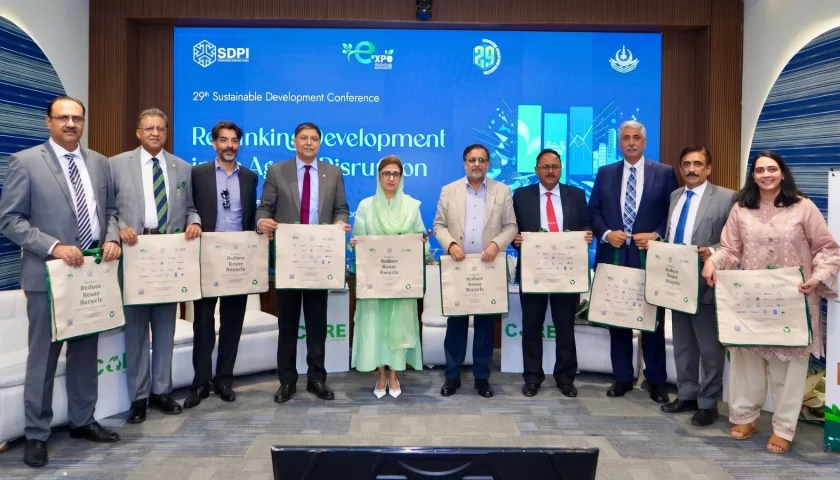
PAKISTAN – The Collect & Recycle Alliance is demanding a harmonized, phased, and inclusive Extended Producer Responsibility framework to overhaul Pakistan’s waste management, warning that current fragmented systems are failing to scale recycling infrastructure or attract private investment.
At the 29th Sustainable Development Conference in Islamabad, industry leaders outlined the critical need for a unified national EPR policy.
Sheikh Waqar Ahmad, CEO of CoRe Alliance, emphasized that building a circular economy requires both enabling policy frameworks and practical action, calling for greater industry participation, tax incentives, and easier access to financing to attract private investment in recycling infrastructure.
Recycling Sector Highlights Segregation Failures
The policy dialogue exposed major inefficiencies in the current recycling value chain.
Babar Aziz Bhatti, CEO of Green Earth Recycling and Chairperson of the EPR Committee, highlighted that while the recycling sector has the capacity to process significant volumes of material, a lack of proper waste segregation is driving up processing costs and degrading the quality of recycled products.
The Alliance is pushing for phased targets, shared value-chain responsibilities, and the integration of informal waste workers into a formalized system.
White Paper Advocates Regulatory Consistency
The push for reform is backed by a White Paper submitted to the Federal Minister for Climate Change in May 2026.
During the session, Namwar Yusuf Rahman, Project Manager at CoRe Alliance, presented the White Paper’s key recommendations, which advocate for a harmonized approach that promotes regulatory consistency while accommodating provincial and local realities.
The framework also proposes industry-led Producer Responsibility Organizations (PROs) under regulatory oversight, digital traceability, and green financing mechanisms.
Minister Endorses Collective Action
Dr. Shezra Mansab Ali Khan Kharal, Minister of State for Climate Change and Environmental Coordination, endorsed the initiative, stating that Pakistan’s transition towards a circular economy requires collective action and strong collaboration between government and industry.
She noted that effective EPR implementation can strengthen waste management and recycling systems, promote responsible resource management, and help establish better systems in Pakistan.
Reusable Packaging Pilot Supports Policy Shift
To complement the policy push, CoRe Alliance handed over 5,000 reusable tote bags to the Pakistan Environmental Protection Agency (Pak-EPA) to promote sustainable alternatives and reduce reliance on single-use plastics in the Islamabad Capital Territory, supporting the implementation of the Single-Use Plastics (Prohibition) Regulations, 2023.
Subscribe to our email newsletters that provide busy executives like you with the latest news insights and trends from Africa and the World. SUBSCRIBE HERE


Be the first to leave a comment