

Emirates’ new closed-loop recycling, upcycling programs turn aircraft waste into new meal trays, student-designed products
The deSter partnership enables large-scale UAE recycling, lowering carbon footprint by avoiding international transport of recyclable materials.
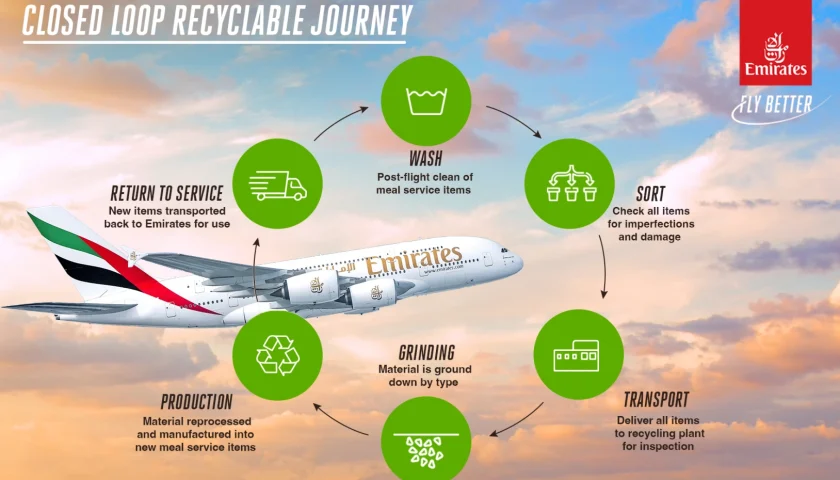
UAE – Emirates has launched two sustainability initiatives in Dubai, including a closed-loop recycling program that processes used meal service items into new trays and bowls with 25% recycled content, and a Material Futures Studio where university students create products from retired aircraft components.
The airline’s closed-loop recycling initiative collects millions of used plastic meal service items from Economy and Premium Economy classes.
These items are cleaned, inspected, and recycled locally at deSter’s facility in Dubai, producing new trays, bowls, and dishes for onboard service, with around 25 percent of the new products made from reused materials.
The partnership with deSter, a specialist in aviation serviceware, ensures large-scale sustainable recycling within the UAE, minimizing the carbon footprint by avoiding overseas shipment of recyclable materials.
The deSter factory emphasizes sustainable design, including solar power usage and water efficiency.
Material Futures Studio Engages University Students in Upcycling Aircraft Materials
Emirates Engineering has launched the Material Futures Studio, a six-week program engaging university students from Khalifa University, Emirates Aviation University, and the University of Sharjah.
The initiative challenges students to develop new products by creatively reusing retired aircraft materials, guided by Emirates Engineering professionals.
The program began with an orientation and tour of Emirates Engineering facilities, exposing students to aircraft maintenance operations and the upcycling workshop.
Students will develop and present their upcycled product concepts at a final showcase.
The program provides hands-on experience in sustainable design, helping students understand how materials can be repurposed for new applications while reducing waste in the aviation sector.
Fleet Retrofit and Broader Upcycling Initiatives
The student program complements Emirates’ broader fleet retrofit effort, which involves refurbishing 219 Airbus A380 and Boeing 777 aircraft.
Materials removed during retrofits are repurposed into handcrafted products by Emirates Engineering’s in-house upcycling team in Dubai.
Additional initiatives include the Aircrafted by Emirates collection of luggage and accessories made from reclaimed aircraft materials, and the Aircrafted KIDS project, which transforms recovered fabrics into handmade backpacks for children. More than 4,000 backpacks have been donated across 11 countries.
The initiatives align with Emirates’ wider sustainability strategy, which includes fuel efficiency measures, sustainable aviation fuel adoption, and waste reduction targets across its operations.
Subscribe to our email newsletters that provide busy executives like you with the latest news insights and trends from Africa and the World. SUBSCRIBE HERE
Be the first to leave a comment