

Ghana to confiscate banned styrofoam cargo from January 2027
Focusing on the border instead of retail, authorities aim to close a loophole letting importers bypass local bans with prohibited packaging materials from abroad.
GHANA – The Environmental Protection Authority has announced that from 1 January 2027, any cargo arriving in Ghana containing banned polystyrene or styrofoam products will be confiscated and destroyed, shifting enforcement upstream to the point of entry.
Prof. Nana Ama Browne Klutse, chief executive of the Environmental Protection Authority, said enforcement is moving upstream, aiming to intercept banned items before they enter domestic distribution networks.
The policy targets the foam takeaway packs that clog drains and contribute to flood waters returning to Accra each rainy season.
By focusing on the border rather than retail sites, authorities intend to close a loophole where local bans are circumvented by importers bringing in prohibited packaging materials from abroad.
Importers Given 65 Days to Adjust Orders
Anyone with a container currently in the pipeline has about 65 days to adjust orders.
Confiscation and destruction represents a total loss rather than a fine that can be budgeted into operational costs, creating a significant financial risk for non-compliant importers.
Businesses that have already placed orders for styrofoam food containers, cups, and packaging inserts must redirect shipments or absorb the loss of their cargo at the port.
Alternative Packaging Demand Set to Surge
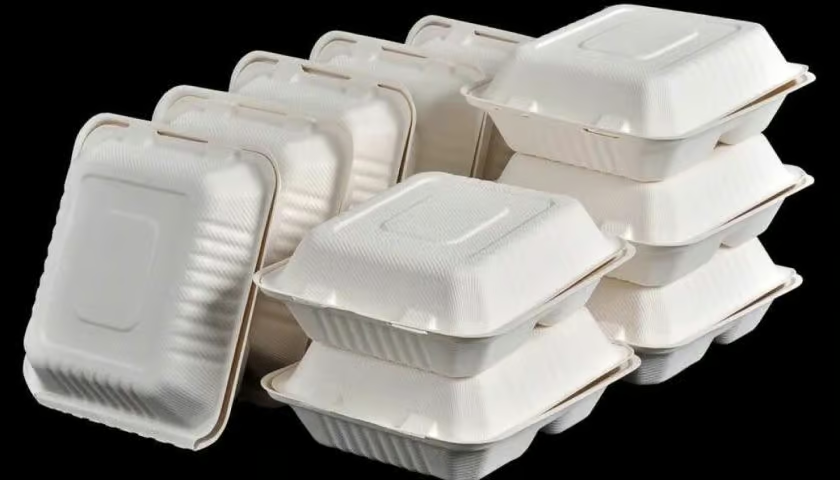
The enforcement creates immediate demand for alternatives including bagasse, paper, palm leaf, and other biodegradable packaging.
These materials must be available, affordable, and consistent in supply to replace the high volumes of styrofoam currently used by food vendors.
The Authority noted that local manufacturers have a real opening here, describing it as a genuine industrial opportunity.
For packaging converters and food service operators, the transition requires securing reliable suppliers of moulded fibre, coated paperboard and compostable formats capable of meeting hygiene and heat resistance requirements for takeaway meals.
Supply Chain and Manufacturing Investment Required
Meeting domestic demand for affordable food packaging will require investment in local production capacity.
Bagasse moulding, paper cup forming and palm leaf processing all demand specialised equipment and quality control systems that cannot be established overnight.
Importers and distributors that previously relied on cheap styrofoam will need to develop supplier relationships with regional and international manufacturers, potentially increasing packaging costs in the short term.
However, the policy direction aligns with broader African efforts to restrict single-use plastics and build circular packaging economies, creating opportunities for manufacturers that move early to establish compliant production lines serving Ghana’s food service sector.
Subscribe to our email newsletters that provide busy executives like you with the latest news insights and trends from Africa and the World. SUBSCRIBE HERE


Be the first to leave a comment