

JRC Study: EU plastic packaging rose 11% to 5.9MT while other materials declined
The JRC has also proposed harmonised waste sorting labels under the Packaging and Packaging Waste Regulation, recommending unified pictograms, colour-coded symbols and receptacles to improve consumer sorting behaviour and increase recycling rates across the bloc.
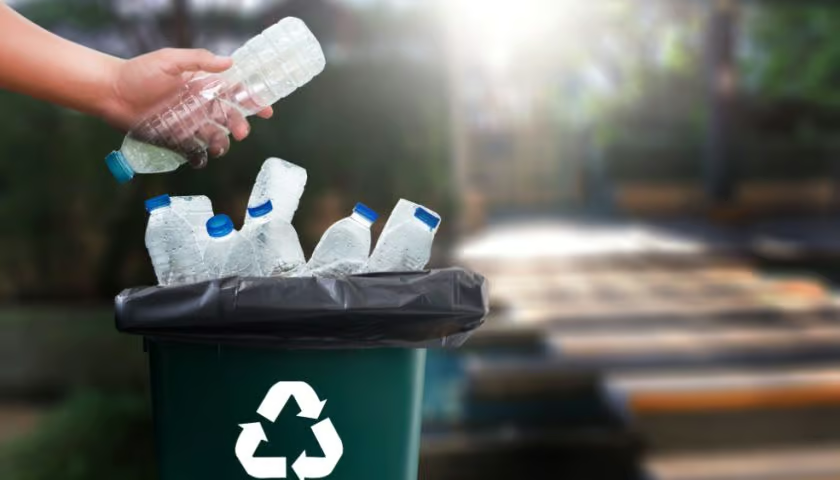
EUROPE – Plastic was the only packaging material to record an 11 percent growth across 19 EU countries between 2011 and 2025, reaching 5.9 million tonnes placed on the market in 2025, equivalent to an average of 14 kg per capita.
The Joint Research Centre study, published on 6 July 2026, analysed packaging materials across member states representing more than 97 percent of the EU population.
In 2024, total packaging placed on the market reached 98 kg per capita, with food and beverage products accounting for 97 percent of that volume.
Glass packaging represented approximately 75 percent of the overall weight due to its density, with beer bottles alone accounting for roughly 16.5 million tonnes.
Wide Variation in Plastic Packaging Consumption Across Member States
The 14 kg per capita average masked significant national differences.
Germany recorded 16 kg of plastic packaging per person in 2024, while Sweden used approximately half that amount at 8 kg.
Plastic consumption increased notably in Ireland, Romania and Poland, while markets in Belgium, France and the Netherlands remained relatively stable.
In Italy, plastic water bottles represented 46 percent of total plastic consumption, compared with just 6 percent in Sweden.
PET remained the dominant polymer for beverage bottles in most countries, though polypropylene held a larger share in Finland, Ireland, the Netherlands and Sweden.
These variations highlight the challenges facing harmonised recycling and collection efforts across the EU.
Consumer Packaging Categories and Single-Use Plastic Bottle Collection Performance
Bottled water, dairy products and soft drinks accounted for the highest weight of plastic packaging in 2024.
The European Commission reported that 2.54 million tonnes of plastic bottles reached the EU market in 2022, with twelve countries, including Estonia, Poland, Finland, Germany, Denmark, Sweden, Norway, Lithuania, Croatia, Iceland, Slovakia and Belgium, surpassing the 77 percent collection target for single-use plastic bottles.
The data underscores the progress made in some markets while revealing the uneven pace of packaging sustainability across the EU.
The JRC has also proposed harmonised waste sorting labels under the Packaging and Packaging Waste Regulation, recommending unified pictograms, colour-coded symbols and receptacles to improve consumer sorting behaviour and increase recycling rates across the bloc.
Subscribe to our email newsletters that provide busy executives like you with the latest news insights and trends from Africa and the World. SUBSCRIBE HERE
Be the first to leave a comment