

National Bank of Egypt partners clothing bank on textile recycling project
Project: vulnerable women/children’s needs + health, school attendance, textile recycling, bank’s sustainable-solution, civil-society partnership model.
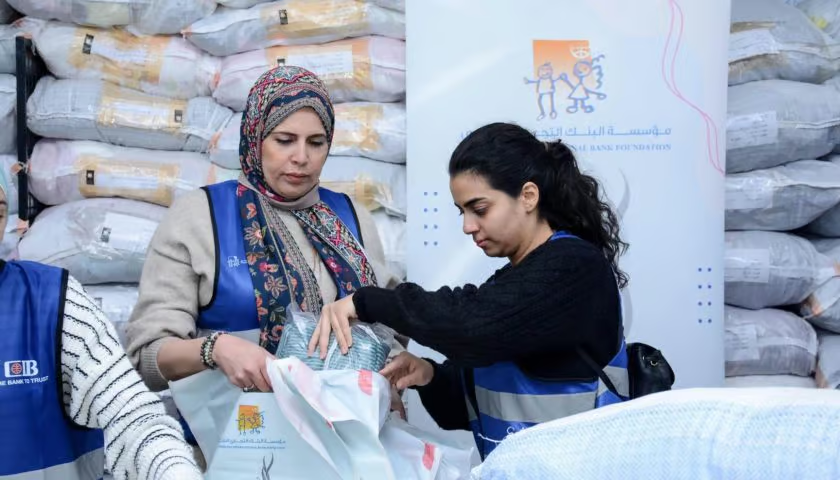
EGYPT – The National Bank of Egypt has signed a cooperation protocol with the Egyptian Clothing Bank to implement the Dignity Clothing project, which aims to provide suitable, hygienic and eco-friendly clothing to women and children from vulnerable groups across Egypt.
The initiative supports the bank’s efforts to advance community development and improve quality of life for those most in need.
The project addresses the basic needs of vulnerable women and children while promoting health, supporting school attendance and reducing textile waste through recycling.
It reflects the bank’s approach of addressing basic needs through sustainable solutions and partnering with civil society organisations to extend the reach and impact of its initiatives.
Signing Ceremony Draws Minister and Central Bank Officials
The signing ceremony was attended by Social Solidarity Minister Maya Morsy, Central Bank of Egypt Deputy Governor for Corporate Social Responsibility Ghada Tawfik, Egyptian Clothing Bank Board of Trustees Chairperson Ghada Waly, National Bank of Egypt Head of Marketing and Community Development Dina Abou Taleb, and Egyptian Clothing Bank Chief Executive Manal Saleh.
Thirty Tonnes of Pre-Consumer Textile Waste Targeted
Abou Taleb said Dignity Clothing addressed the need for suitable, hygienic clothing among women and children while tackling textile waste.
Beyond meeting a basic material need, the project aims to support beneficiaries’ physical and psychological well-being, help children attend school regularly and ease household expenses.
The initiative also plans to recycle around 30 tonnes of pre-consumer textile waste, turning discarded materials into a resource for community use.
Abou Taleb added that the bank prioritised initiatives linking social needs with environmental sustainability by converting available resources into practical solutions.
Circular Economy Principles Applied to Social Programmes
Saleh said the partnership with the bank was expected to help extend the initiative to more beneficiaries across Egypt’s governorates and convert textile waste into useful products.
She described the cooperation as an important step toward expanding the project and translating circular economy principles into practical social and environmental benefits.
Morsy praised the bank’s role in supporting sustainable development, saying partnerships with the banking sector helped strengthen social protection programmes, expand assistance to vulnerable groups and promote economic empowerment of Egyptian families.
Waly thanked the bank for its longstanding support, noting that innovative ideas and more efficient use of resources could help deliver community initiatives with greater impact, and highlighted the Clothing Bank’s commitment to recycling and maximising use of available materials.
Subscribe to our email newsletters that provide busy executives like you with the latest news insights and trends from Africa and the World. SUBSCRIBE HERE

Be the first to leave a comment