

FeniyX patents hybrid 3D printing process using recycled metal scrap
By blending coarse-grained recycled material with fine metal powder, the process reduces reliance on costly additive-manufacturing powders; conventional aerospace component machining, meanwhile, leads to substantial material loss.
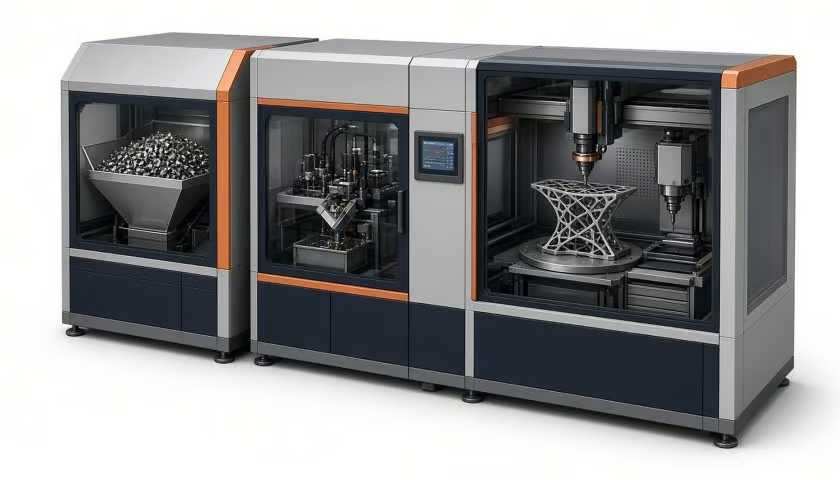
INDIA – FeniyX Aerospace Technologies has patented a hybrid 3D printing process designed to produce aerospace components from recycled metal scrap, protected under patent number IN 588466.
The process combines coarse-grained recycled material with fine metal powder, intended to reduce dependence on costly powders manufactured specifically for additive manufacturing.
Conventional machining of aerospace components results in significant material loss. According to a study published in 2024 in the journal Sustainability, it can take as much as 12 to 25 kilograms of raw material to produce one kilogram of finished titanium components.
Recycling scrap directly into the printing process therefore addresses both cost and material efficiency concerns simultaneously.
Titanium Chips Processed Into Dual Particle Fractions
FeniyX aims to feed this waste directly back into the additive manufacturing process. Ti-6Al-4V chips, for example, are cleaned and processed into particles with grain sizes between 50 and 200 micrometres.
They are then mixed with fine metal powder ranging from 15 to 45 micrometres.
A multi-chamber dosing system combines both fractions under an argon shielding gas, and the material enters the laser-based melting zone via a coaxial pressure head.
AI Control Compensates for Recycled Material Variability
An AI-based process control system analyses the melt using thermal imaging and particle monitoring.
Laser power and scan speed are adjusted during production to compensate for variations in the properties of the recycled material.
This adaptive control is essential because recycled feedstock exhibits greater variability than virgin powder, and without real-time adjustment, inconsistent melt pools would produce defects that disqualify components from aerospace use.
In addition to titanium, the patent covers aluminium, stainless steel and nickel-based alloys, and provides for gradual transitions between different metals.
Facility and Certification Testing Planned in India
Anand B, founder of FeniyX, said the aerospace industry discarded most of the titanium it paid for, adding that the company’s goal was to convert this scrap into certified, flight-worthy material at a fraction of the cost and carbon dioxide emissions associated with virgin powder.
FeniyX is currently preparing to set up a production facility in India and conduct independent material testing, to be followed by pilot projects with companies in the aerospace and defence industries.
Anand added that the company saw this as a global opportunity and invited aerospace manufacturers and additive manufacturing partners worldwide to join in advancing scrap-based component production at industrial scale.
Whether the process reaches industrial scale depends on reproducible material properties, process stability and successful qualification of printed components.
Subscribe to our email newsletters that provide busy executives like you with the latest news insights and trends from Africa and the World. SUBSCRIBE HERE


Be the first to leave a comment