
Toppan, Irplast open BOPP film line in Italy to cut plastic use
New line by late 2026: more Toppan capacity/efficiency, stable local supply for sustainable packaging demand.
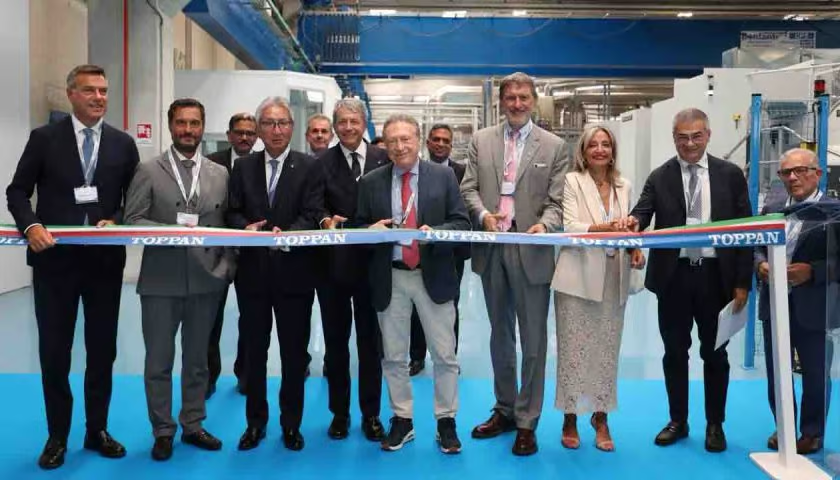
ITALY – Toppan Group and its Italy-based subsidiary Irplast have opened a BOPP film production line expected to deliver up to 30,000 metric tons of annual capacity, with development focused on reducing film thickness while maintaining strength.
The production line manufactures high-performance biaxially oriented polypropylene films, which according to Toppan possess uniform properties and stability achieved through linear simultaneous stretching machine processes, a form of biaxial film orientation technology.
These characteristics suit high-end packaging applications requiring durability, alongside demanding processes such as retort sterilisation.
The new line is expected to be operational by late 2026, expanding Toppan’s production capabilities and enhancing manufacturing efficiency while ensuring stable local supply to meet rising demand for sustainable packaging in Europe and beyond.
Downgauging Reduces Material Without Sacrificing Performance
Using the new manufacturing line, development of BOPP films will concentrate on downgauging.
Reducing film thickness supports a steady and continuous reduction in plastic consumption while maintaining strength, addressing the central trade-off in lightweighting where thinner formats risk compromising durability, seal integrity and barrier performance.
Toppan said the combination of Irplast’s BOPP film manufacturing expertise and Toppan’s broad base of technologies and solutions would expand sustainable solutions worldwide.
Films suitable for retort sterilisation hold particular value in food packaging, where high-temperature processing demands substrates that resist deformation and maintain barrier properties under thermal stress.
Lightweighting Trend Accelerates Under European Regulation
Innovations in plastic reduction through lightweighting continue rising as brands respond to regulations including the European Union’s Packaging and Packaging Waste Regulation.
Lightweighting has helped brands reduce material use and transport emissions, though lightweight formats can create trade-offs around recyclability, sorting performance and end-of-life recovery.
These tensions have drawn increasing scrutiny in sectors including pharmaceutical packaging, where barrier requirements limit material reduction options and regulatory compliance constrains format changes.
For converters and brand owners, the challenge lies in balancing material savings against performance thresholds that determine whether packaging protects products adequately through distribution and storage.
Earlier Investments Extend BOPP and BOPE Capabilities
Last year, Toppan and its India-based subsidiary Toppan Specialty Films installed a hybrid manufacturing line in India for producing BOPP and biaxially oriented polyethylene film on the same machine.
The company also worked alongside PureCycle Technologies to develop flexible films and thermoformed packaging using high-quality recycled content addressing global regulatory requirements.
These investments reflect a strategy of combining capacity expansion with material innovation across multiple geographies, positioning Toppan to serve packaging customers navigating tightening recyclability rules and rising demand for recycled content in film applications.
Subscribe to our email newsletters that provide busy executives like you with the latest news insights and trends from Africa and the World. SUBSCRIBE HERE
Be the first to leave a comment