

Polymateria PE, PP packaging biodegrades in 269-292 days in open environments
The technology is built into plastics during manufacture, requiring no process or equipment changes, making it instantly scalable and cost-effective for producers worldwide.
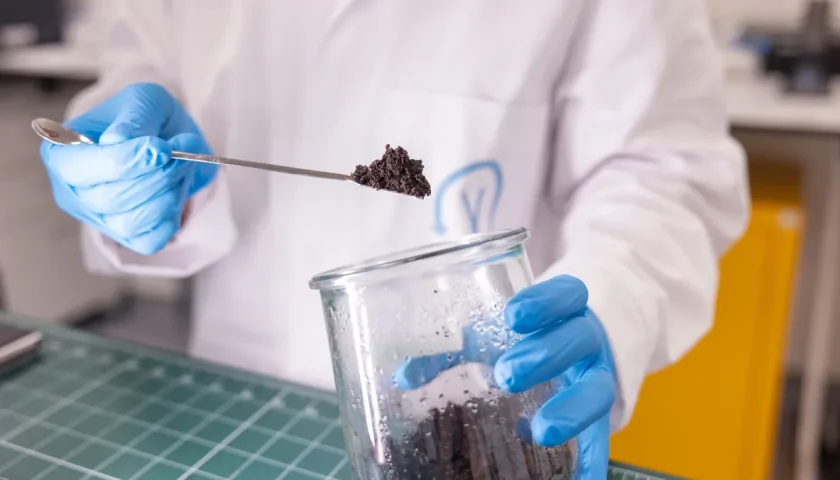
UK – Polymateria has published peer-reviewed research demonstrating that its Biotransformation technology enables polyethylene and polypropylene packaging to fully biodegrade in open terrestrial environments within two years, with SIRIM testing recording PE degradation in 292 days and PP in 269 days.
The research, conducted alongside Imperial College London and Malaysia’s Standard and Industrial Research Institute (SIRIM), shows the technology transforms plastic into a bioavailable wax that soil microbes then consume, returning the material to nature without leaving microplastics or toxic residues.
Dr Florence Huynh, VP of Innovations at Polymateria, stated that the process is triggered by natural elements of decay, sunlight, heat, moisture, and air, and the bioavailable wax is consumed by microbes naturally occurring in soil.
Biotransformation Technology and Scalability
The technology is integrated into plastics at the point of manufacture with no need for changes to processes or new equipment, making it immediately scalable by plastic producers worldwide and cost-effective.
Dr Jose Jimenez Zarco, research lead and associate professor at Imperial College London, commented that uncovering pathways through which polyolefin plastics can fully biodegrade is a remarkable discovery, with the approach having real-world impact on tackling plastic pollution.
The technology addresses the approximately 32 percent of plastic packaging waste that escapes into the environment globally each year, offering a solution for applications where conventional recycling or waste management may fail.
The technology is not recommended for plastics requiring very long life, such as in the automobile industry, or for polystyrene or PVC, as these would risk becoming toxic if they biodegrade.
Certification and Market Adoption
The research follows the BSI PAS 9017 standard for biodegradation in the open terrestrial environment, providing the basis for the SIRIM ECO 098 Ecolabel certification in Malaysia.
Muhammad Zuhayr, senior researcher at SIRIM, stated that credible alternatives such as biodegradable plastics can play an important role in supporting Malaysia’s transition toward a more circular plastics economy.
Celine Moreira, global partnership director at Polymateria, noted that the packaging industry is now at a point where the era of pilots needs to end and give way to technologies that can truly scale and integrate with circular systems.
The technology has already been adopted by over 300 Asian brands, including ZUS Coffee, Kopi Kenangan, and Dunkin’ Donuts, primarily in cups, straws and cutlery applications.
Subscribe to our email newsletters that provide busy executives like you with the latest news insights and trends from Africa and the World. SUBSCRIBE HERE
Be the first to leave a comment