

Offshore vessel purge from Africa to feed scrap-starved recyclers
Tight tonnage has challenged recyclers in Turkey and South Asia, as firm freight markets led owners to keep older vessels in service rather than sell for scrap.
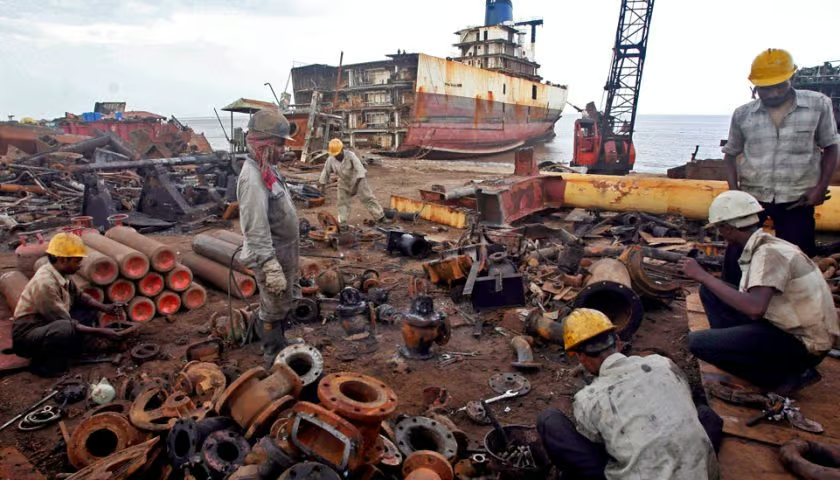
AFRICA – A sudden clear-out of large offshore assets from Africa is set to supply ship recyclers in Turkey and the Indian subcontinent, with the haul including a storage tanker, a drilling rig and a diamond mining vessel awaiting sale.
The offshore vessel purge is expected to provide relief to recycling facilities facing constrained feedstock supplies.
Recyclers in Turkey and South Asia have contended with limited tonnage availability as freight markets remained firm, encouraging owners to keep older vessels trading rather than selling for scrap.
The arrival of large offshore units, which typically operate outside conventional commercial shipping cycles, offers an alternative source of material for yards configured to handle complex structures.
Storage Tanker and Drilling Rig Lead the Inventory
The recycling haul includes a storage tanker and a drilling rig, with a diamond mining vessel waiting in the wings.
Offshore units differ significantly from standard cargo vessels in dismantling requirements, since they often contain specialised equipment, hazardous materials and complex structural configurations.
Yards accepting these assets must manage additional safety and environmental protocols, particularly where drilling equipment and storage systems retain residual hydrocarbons or contain regulated substances.
Regional Recycling Capacity Faces Structural Barriers
While the offshore purge provides immediate feedstock, Africa’s own recycling capacity remains constrained by legal frameworks.
The Bamako Convention prohibits the import of hazardous waste into Africa from non-party states, a classification that encompasses most end-of-life vessels containing asbestos, PCB equipment or oil residues.
This prohibition has prevented African states from developing large-scale ship recycling industries despite possessing suitable coastal infrastructure and labour availability.
Egypt has moved to establish a ship scrapping project at Damietta Port intended to produce 1.5 million tonnes of scrap annually within five years, covering 66 percent of domestic rebar production requirements, though the Bamako Convention’s restrictions on vessel imports from outside Africa present a significant operational hurdle.
Scrap Demand Links Recycling to Steel and Packaging Supply Chains
Ship recycling supplies steel scrap to regional mills, feeding construction and manufacturing sectors that include packaging machinery and metal container production.
For African steel producers facing scrap shortages, domestic recycling capacity would reduce reliance on imported material and lower foreign currency expenditure.
The offshore vessel purge therefore highlights a paradox: while African waters generate end-of-life assets requiring dismantling, regulatory constraints prevent the continent from processing them domestically, directing vessels instead to Turkish and South Asian yards that can legally accept them.
Subscribe to our email newsletters that provide busy executives like you with the latest news insights and trends from Africa and the World. SUBSCRIBE HERE


Be the first to leave a comment