

Dubai’s launches new A-to-E packaging grade rates for nutritional accuracy
The classification lets food businesses validate nutritional claims before or after market entry. Accurate information aids regulatory compliance and boosts confidence among regulators and consumers.
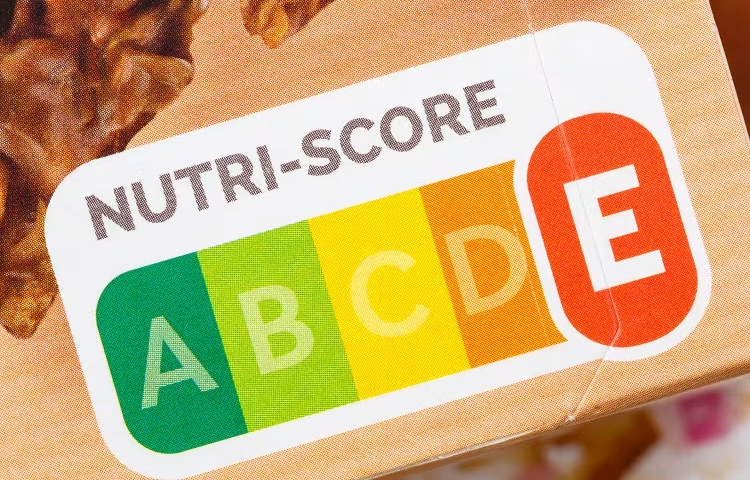
UAE – Dubai Central Laboratory has launched a testing service that grades packaged food products from A to E based on the accuracy of their nutritional labels, allowing consumers to assess how much they can trust the sugar, fat and calorie information on packaging.
The service, announced on 1 September 2026, examines products and checks whether figures printed on packaging match actual contents.
The resulting grade indicates how accurately the nutritional information, including sugar, fat, calories, protein, carbohydrates, fibre and sodium, reflects what is present in the product.
Unlike front-of-pack health ratings, an A grade does not mean the product is healthier; it means the nutritional data on the label is reliable.
How the A-to-E Food Label Verification System Works
Dubai Central Laboratory tests food products through its specialised laboratory service before assigning an accuracy grade ranging from A to E.
The classification gives food businesses a way to validate nutritional information declared on their products, whether before they reach the market or after they are already being sold.
For manufacturers and suppliers, accurate nutritional information can support regulatory compliance and strengthen confidence among regulators and consumers.
The system does not replace existing nutritional information but offers an additional reference point for consumers comparing products.
Nutrition Labelling Transparency and Consumer Trust
For shoppers comparing breakfast cereals, choosing a post-gym snack or monitoring their calorie, sugar or protein intake, the system provides a quick way to assess how much confidence they can place in the numbers printed on packaging.
Consumers are encouraged to examine complete nutritional information instead of basing a purchase on a single statement displayed prominently on the front of a packet.
Health-related claims on packaging can also require closer attention, as some statements can create a health halo without providing much information about a product’s overall nutritional quality.
The initiative aligns with broader Dubai measures to support healthier eating, including enhanced food and nutrition guidelines for schools and colleges introduced by Dubai Municipality in 2025, which call for reduced added sugars, increased fibre and consistent labelling standards.
The new service reinforces Dubai Central Laboratory’s role in supporting food safety, quality assurance and consumer awareness.
Subscribe to our email newsletters that provide busy executives like you with the latest news insights and trends from Africa and the World. SUBSCRIBE HERE


Be the first to leave a comment