

Smurfit Westrock study finds up to 97% of consumers separate bag-in-box packaging for recycling
The results suggest consumers are more willing to recycle when packaging is intuitive and easy to sort.
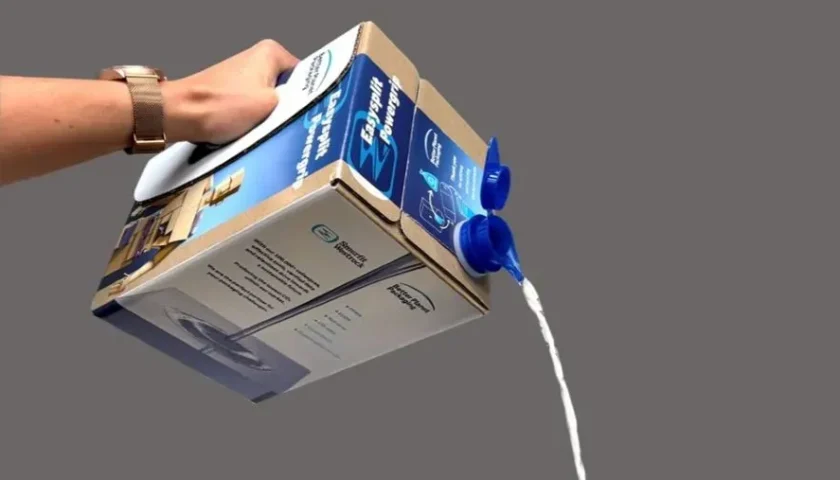
EUROPE – Smurfit Westrock Bag-in-Box has released a new study revealing that consumers across Belgium, France, Germany and Sweden are actively separating Bag-in-Box packaging components, with separation rates reaching as high as 97% and demonstrating strong consumer readiness for circular packaging systems.
The study, conducted by Smurfit Westrock Bag-in-Box, examined whether consumers separate the plastic bag from the cardboard box after use, a critical step in ensuring packaging materials are directed to appropriate recycling streams.
Across all four countries, the majority of consumers follow proper recycling practices by separating different packaging components before disposal.
The findings come as Europe prepares for the full implementation of the Packaging and Packaging Waste Regulation (PPWR), which places increased focus on packaging recyclability, resource efficiency and circularity.
Regional Variations and PPWR Context
The research also reveals significant differences between countries, reflecting variations in waste collection systems, recycling policies, consumer education and local sorting guidance.
These factors are likely to play an important role in determining how effectively packaging materials are recovered and recycled across the EU.
The PPWR, which took effect on 12 August 2026, establishes a single rulebook for packaging across the Union and applies to all packaging placed on the EU market, including Bag-in-Box formats.
The regulation governs the entire packaging lifecycle, from design and manufacture to collection, recycling and reuse, and mandates that all packaging must be economically recyclable, with stricter requirements taking effect from 2030 and 2035.
Consumer Behaviour and Packaging Design Implications
The study’s findings highlight the increasingly important role consumers play in improving packaging circularity.
Massimiliano Bianchi, CEO of Smurfit Westrock Bag-in-Box, stated that understanding how consumers interact with packaging after use is essential.
He noted that the study confirms Bag-in-Box users are generally adopting the right recycling habits while also showing where additional education and communication can further improve performance.
The results suggest consumers are increasingly willing to engage with recycling systems when packaging is designed to be intuitive and easy to sort.
Clear recycling guidance, combined with packaging designed for easy component separation, can support higher recovery rates across Europe as the industry prepares for the PPWR’s ambitious recycled content targets, including a 10% minimum for contact-sensitive plastic food packaging by 2030.
Subscribe to our email newsletters that provide busy executives like you with the latest news insights and trends from Africa and the World. SUBSCRIBE HERE


Be the first to leave a comment