

Trimet’s new 40,000T laser sorting hub strengthens aluminium recycling in Hamm
The LIBS system analyses up to 150 scrap pieces per second, detecting alloying elements like silicon, copper, iron, and magnesium.
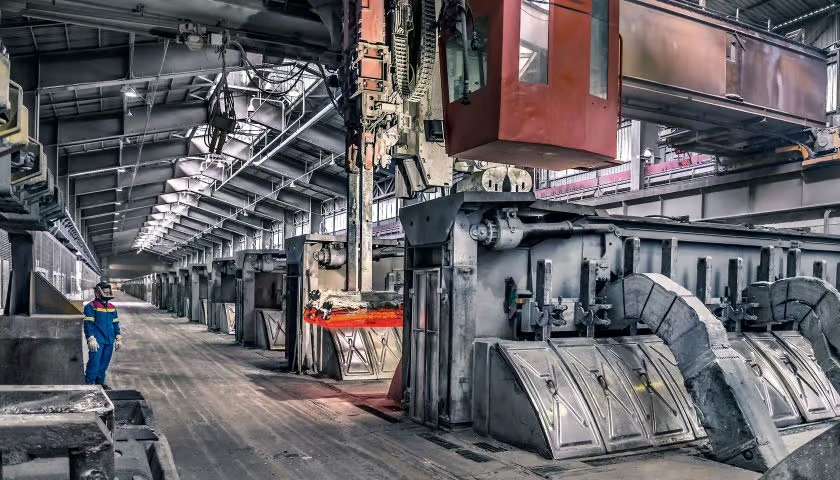
GERMANY – Trimet Aluminium has announced the upcoming opening of a 40,000-tonne-per-year aluminium scrap sorting facility in Hamm, Germany, scheduled to start operations in October, using LIBS laser technology to improve recycled metal quality and reduce reliance on primary raw materials.
The facility integrates sorting and processing steps previously handled by external partners into Trimet’s own operations.
The LIBS (Laser-Induced Breakdown Spectroscopy) system analyses up to 150 pieces of scrap per second, identifying alloying elements including silicon, copper, iron and magnesium.
Targeted air pulses then direct scrap to appropriate material fractions, with a scrap press compressing sorted material into transportable packages for subsequent melting.
The project is funded by the German Federal Ministry for Economic Affairs and Climate Action.
Alloy-Specific Sorting Enables High-Quality Recycling and Independence from Primary Materials
Scrap containing different alloying elements requires precise sorting before re-entry into production cycles.
The Hamm facility enables Trimet to control alloy supply more flexibly, reduce dependence on primary raw materials, and improve the CO₂ balance of its materials.
The enhanced sorting increases recycling stream quality and supports development of aluminium products with higher recycled content.
Trimet already offers Trimal-04, a high-pressure die-casting alloy with high recycled content, and is developing a recycled version of Trimal-38 for automotive battery housings and structural components.
Aluminium recycling uses approximately 95 percent less energy than primary production, saving about 11 tonnes of CO₂ per tonne.
Broader Recycling Expansion Across Germany
The Hamm project forms part of Trimet’s wider recycling expansion in Germany, alongside capacity investments in Gelsenkirchen and Essen.
The Gelsenkirchen facility has increased production capacity by up to 80,000 tonnes of recycled aluminium per year, with melting furnaces operating using hydrogen-rich process gas from August 2026.
Essen gained approximately 16,000 tonnes of additional storage capacity for alloy-specific scrap separation.
Philipp Schlüter, CEO of Trimet Aluminium, stated the new facility creates additional raw material supply independence while strengthening the company’s ability to provide high-quality recycled materials for industry.
By improving alloy-specific sorting and increasing secondary aluminium use, the company aims to support lower-carbon aluminium production and more efficient circular material flows while integrating key recycling value chain links in-house.
Subscribe to our email newsletters that provide busy executives like you with the latest news insights and trends from Africa and the World. SUBSCRIBE HERE


Be the first to leave a comment