

RASA seeks suspension of South Africa’s scrap metal price preference system
Price Preference System: 30% discount + freight to local mills before export, hurts collector earnings, caps buyer prices, says association.
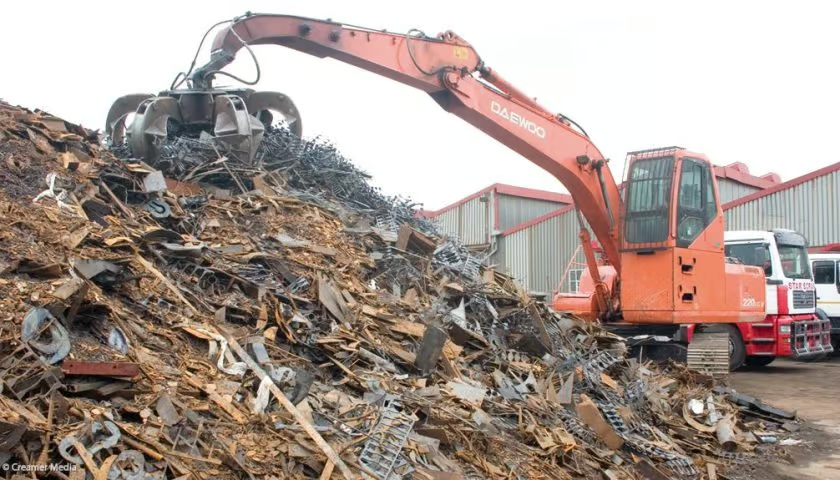
SOUTH AFRICA – The Recycling Association of South Africa has urged Parliament’s trade industry committee to suspend the Price Preference System, citing financial pressure on informal collectors and reduced export competitiveness.
The Price Preference System requires scrap metal exporters to offer material to local steel mills at a 30 percent discount, along with freight payment, before export is permitted.
According to the association, this structure impacts collector earnings and limits the prices buyers can pay for recovered material.
The system was introduced in 2013 as a measure to secure domestic feedstock for local steel production, but critics argue it distorts pricing and reduces incentives for collection at the informal level.
Sector Processes 2.5 to 3 Million Tonnes Annually
RASA presented data to the committee showing the sector processes between 2.5 and 3 million tonnes annually and supports approximately 400,000 informal waste pickers.
The association argued that low resale prices and perceived exploitation by buyers have left many informal collectors struggling financially.
Suspending the Price Preference System would, according to RASA, allow market-driven pricing to improve returns for collectors and strengthen the economics of recovery across the value chain.
Scrap Prices Reflect Global Market and Supply Conditions
Scrap metal prices remain complex, determined by supply companies and global market fluctuations.
Export demand, international commodity benchmarks and local processing capacity all influence what collectors receive for recovered metal.
South Africa’s system adds an additional layer of pricing intervention that diverges from prevailing international rates, creating uncertainty for exporters and buyers alike.
Policy Review Weighs Industrial Feedstock Against Collection Economics
The review places two policy objectives in tension: securing affordable feedstock for domestic steel mills versus maintaining viable returns for collection networks that recover material from households, businesses and industrial sites.
Similar debates have emerged in other markets where export restrictions aim to protect local processing industries.
The outcome of the parliamentary engagement will shape how South Africa balances industrial policy with the livelihoods of informal workers who form the base of its recycling system.
For packaging supply chains, scrap metal pricing indirectly affects the cost of steel components used in cans, closures and industrial containers, making the review relevant beyond the recycling sector alone.
Subscribe to our email newsletters that provide busy executives like you with the latest news insights and trends from Africa and the World. SUBSCRIBE HERE


Be the first to leave a comment