

Selcuk University researchers reinvent starch film with bamboo fibre
Alongside high biodegradability, the films exhibited antioxidant activity delaying oxidative rancidity in fatty foods and antibacterial efficacy against foodborne pathogens.
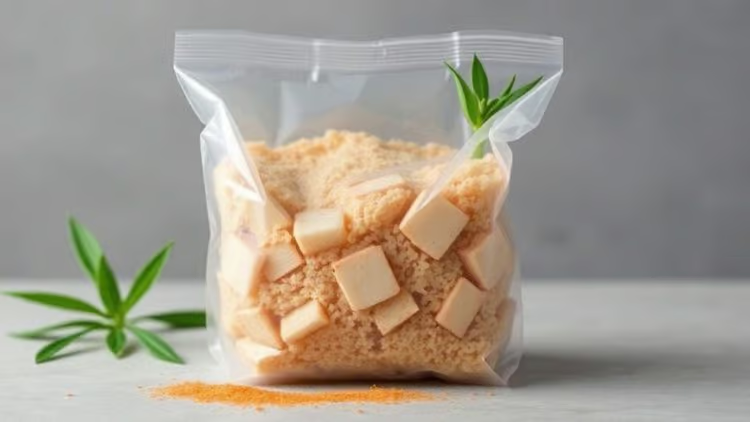
TÜRKİYE – A research team at Selcuk University in Konya has engineered a starch-based food packaging film that pairs sumac extract with bamboo fibre, overcoming the brittleness and moisture sensitivity that have long blocked starch from commercial use.
Starch films carrying only sumac extract reached a tensile strength of 4.81 megapascals. Introducing bamboo fibre at 15 percent of the matrix pushed that figure to 7.06 megapascals, a gain approaching 47 percent.
The mechanism relies on cellulose fibres forming hydrogen bonds with starch chains, distributing stress throughout the material and halting crack propagation at weak points rather than allowing failure to concentrate in one region.
Moisture Barriers Improve Across Two Measures
Water vapour permeability dropped by 43.5 to 51.9 percent once both additives were present, while moisture content fell by 25.0 to 32.2 percent.
These reductions address the central obstacle to starch adoption, since moisture migration accelerates spoilage, sogginess and dehydration in wrapped foods.
Polyphenols in the sumac extract contribute hydrophobic character, while the fibre network densifies the film structure and slows water diffusion.
Colour Shift Signals Spoilage in Real Time
Anthocyanins present in sumac respond to acidity by altering molecular structure, producing visible colour transitions.
When food spoils, microbial activity releases amines that raise pH at the package surface, triggering a detectable shift in the film.
This gives retailers and consumers a direct visual read on product condition, offering an alternative to printed expiration dates that frequently misstate actual spoilage.
Comparable anthocyanin indicator films have been trialled on shrimp, chicken and pork.
Active Properties Extend Beyond Containment
The films demonstrated high biodegradability alongside antioxidant activity capable of delaying oxidative rancidity in fatty foods and antibacterial efficacy against foodborne pathogens.
These combined functions separate active packaging from passive wrapping, because the material chemically interacts with spoilage mechanisms instead of merely enclosing the product.
Gozde Duriye Cataltas and Gulsum Kalemtas led the work, published in Polymer Bulletin.
Bamboo’s rapid growth without pesticides and minimal processing requirements compared with wood pulp reduce petroleum dependence across the material’s life cycle, from production through degradation.
Subscribe to our email newsletters that provide busy executives like you with the latest news insights and trends from Africa and the World. SUBSCRIBE HERE

Be the first to leave a comment