
Packaging firms develop bio-based paperboard for food applications
Built on CellShield Protopia, the system is available in lamination and dispersion coating formats, suited to different packaging structures and end-of-life requirements.
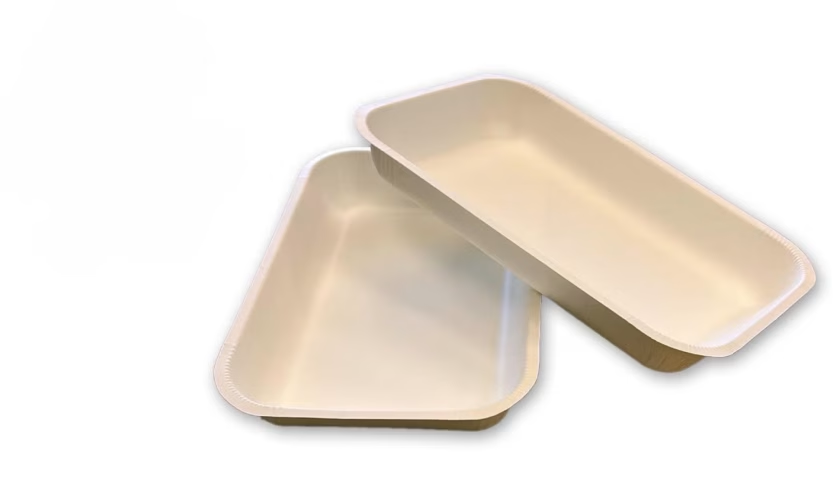
ITALY – Eurobrillance, Plastigraf Trevigiana, NatureWorks and Form iQ have developed a biobased paperboard packaging system for food applications requiring grease resistance, barrier performance and heat sealability, relying on barrier technology using NatureWorks’ Ingeo biopolymer.
The work is based on CellShield Protopia, a barrier technology from Eurobrillance and Plastigraf Trevigiana that uses NatureWorks’ Ingeo biopolymer technology.
The system is available in lamination and dispersion coating formats, allowing it to be applied to different packaging structures and end-of-life requirements.
This dual-format approach gives converters flexibility to choose solutions based on specific product needs, whether the application demands high barrier performance or simpler recyclability.
Lamination Format Joins BOPLA Films to Paperboard
The lamination format joins thin biobased biaxially oriented polylactic acid films to paperboard with a compostable water-based adhesive.
The films provide heat-sealing functionality and additional barrier protection while reducing material use.
Potential applications include thermoformed trays and other food packaging formats.
Combining biobased films with paperboard creates structures that maintain the structural integrity and printability of fibre packaging while adding the moisture and grease resistance required for food contact.
Dispersion Coating Targets Frozen and Short Shelf-Life Products
The dispersion coating format uses a water-based coating containing Ingeo biopolymers, applied in thin layers to paper and paperboard using existing coating equipment.
The format is intended for frozen food packaging and products with shorter shelf lives.
Together, the lamination and dispersion coating technologies can be used in rigid and flexible packaging.
The companies said the approaches support recyclable and compostable packaging solutions, addressing regulatory pressure on single-use plastics across European markets.
Forming Trials Match Conventional PET-Laminated Speeds
Eurobrillance and Plastigraf Trevigiana contributed coating and lamination technologies, while NatureWorks supplied renewable Ingeo biopolymers.
Form iQ provided thermoforming and industrial processing expertise.
The group used the technologies to manufacture thermoformed paperboard trays. During forming trials, the trays retained the barrier performance and production efficiency required for industrial applications.
The trials produced 35-millimetre-deep containers at an average of 27 mould-closing cycles per minute, with forming times of 0.2 seconds.
The companies said these production speeds were comparable to conventional PET-laminated paperboard, an important benchmark since equipment throughput determines whether alternative materials can be adopted without disrupting existing production lines or requiring substantial capital investment.
Subscribe to our email newsletters that provide busy executives like you with the latest news insights and trends from Africa and the World. SUBSCRIBE HERE

Be the first to leave a comment