

UFLEX diverts 552M PET bottles from waste stream in Q2
The Noida expansion embodies an approach that elevates recycling to a core production input instead of a regulatory overhead.
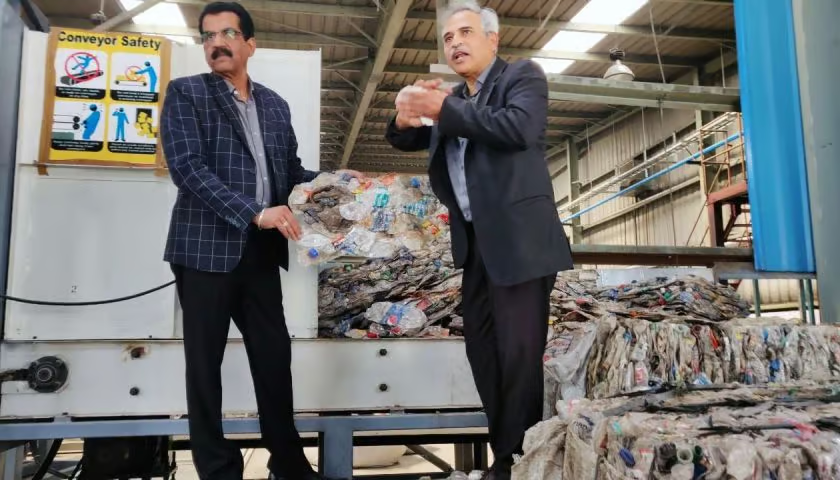
INDIA – UFLEX processed 552 million post-consumer PET bottles and 2,603 metric tonnes of multi-layer packaging waste in the second quarter of FY27, a volume directly tied to the April 30, 2026 start-up of its expanded Noida recycling complex.
The Noida site is not a standalone waste processor; it acts as the feedstock engine for UFLEX’s packaging production.
The plant’s 36,000 metric tonnes of rPET chip capacity are converted into ASCLEPIUS film, which contains 100% recycled content, and other PCR PET chips holding US FDA and FSSAI food-contact approvals.
By closing the loop internally, UFLEX controls the quality of recycled resin entering its own food and beverage packaging formats, bypassing the volatility of external recyclate markets.
Multi-Layer Waste Converted to Moulding Products
The 2,603 metric tonnes of multi-layer and aseptic packaging waste processed during the quarter are transformed into rMLP granules at Noida and Malanpur.
The Malanpur site specifically handles Asepto multi-layer packaging, separating paper-pulp and aluminium-foil streams before converting the remaining plastic into recycled moulding products.
This addresses the industry’s hardest-to-recycle format, flexible multi-layer laminates, by keeping the material within the company’s manufacturing ecosystem rather than sending it to landfill.
Global Network Supports Cross-Border Supply
The company’s recycling footprint now spans six sites across India, Mexico, Egypt, and Poland.
The Mexico facility provides 15,000 metric tonnes of PCR PET chip capacity and 6,000 metric tonnes of rMLP granules, while Egypt contributes 18,000 metric tonnes of PCR PET chips.
The Poland site focuses exclusively on rMLP granules, generating 3,900 metric tonnes.
This geographic spread allows UFLEX to supply recycled-content packaging to brands operating across different regulatory regimes, including the EU’s Packaging and Packaging Waste Regulation.
Long-Term Strategy Beyond Compliance
UFLEX has operated recycling infrastructure since 1995, building a portfolio of more than 100 recycled product variants.
The recent Noida expansion reflects a strategy where recycling is treated as a core manufacturing input rather than a compliance cost.
For packaging converters facing tightening Extended Producer Responsibility (EPR) mandates, this integrated model demonstrates how controlling the recycling step can secure raw material supply and guarantee food-grade quality.
Subscribe to our email newsletters that provide busy executives like you with the latest news insights and trends from Africa and the World. SUBSCRIBE HERE
Be the first to leave a comment