

Latin America’s plastic circularity hampered by policy fragmentation and funding gaps, study finds
Regulatory blind spots on microplastics, hazardous additives, and petrochemical plastic reduction threaten progress.

LATIN AMERICA –Latin America’s plastics transition remains constrained by weak infrastructure, limited financing and regulatory blind spots, despite a wave of circular economy strategies across the region, according to a new study published in Environmental Management.
The research finds that plastic production, consumption and waste generation continue to rise across Latin America, while waste management systems and sustainable trade mechanisms remain “insufficient” to curb environmental leakage.
Authors Felipe Romero and Miguel Ángel González note that circular economy frameworks have gained momentum in recent years.
Countries such as Chile, Uruguay, Ecuador, Colombia and Costa Rica stand out for introducing national roadmaps, promoting recycled materials research and embedding circular design metrics into plastic products.
These countries have also taken steps to strengthen waste collection and sorting systems, while improving working conditions for informal recyclers, a critical component of material recovery in the region.
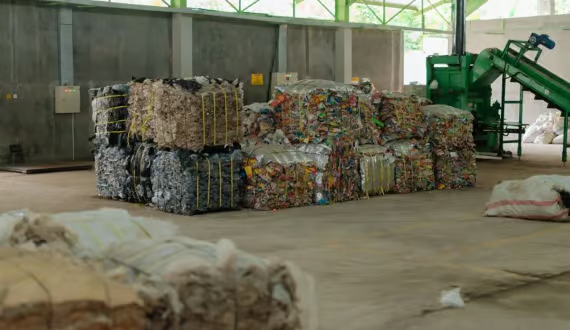
However, the study highlights persistent shortcomings. Financial gaps and limited investment in recycling infrastructure continue to slow scale-up.
Regulatory weaknesses around microplastics and hazardous chemical additives further undermine environmental safeguards.
Most critically, the authors argue that insufficient attention is being paid to reducing the production of problematic petrochemical plastics at source.
Underdeveloped systems and fragmented policies
The research evaluates plastic circularity across three pillars: material flows (production, consumption, waste generation and mismanagement), policy frameworks and business innovation.
It finds that innovative strategies to shift consumer behaviour remain underdeveloped, and recycling systems struggle not only to raise collection rates but also to improve recyclate quality.
Around half of the region has yet to adopt comprehensive government initiatives on plastic circularity.
While several governments are supporting polymer research and recycled content markets, policy gaps persist around microplastics and chemical additives that pose environmental and human health risks.
The authors also point to weak integration between plastic pollution strategies and broader environmental agendas.
“Plastic pollution is still too often addressed in isolation from climate change and biodiversity loss,” they state, noting a lack of national frameworks to monitor how circularity contributes to emissions reductions.
Romero and González argue that Latin America’s circular transition will depend on stronger regional cooperation, improved financing mechanisms and closer alignment between environmental and industrial policy.
They emphasize the need to expand action beyond national roadmaps to local implementation, while creating inclusive dialogue platforms across the plastics value chain to ensure the transition is environmentally effective and economically viable.
As global negotiations on plastics intensify and brand owners push decarbonization targets, the study suggests Latin America’s ability to close policy and funding gaps will determine whether circular ambitions translate into measurable impact.
Subscribe to our email newsletters that provide busy executives like you with the latest news insights and trends from Africa and the World. SUBSCRIBE HERE

Be the first to leave a comment