

Türkiye forest products sector targets packaging competitiveness
Dedebaş: cost is key, Türkiye’s wood prices vs competitors squeeze packaging manufacturers/exporters.
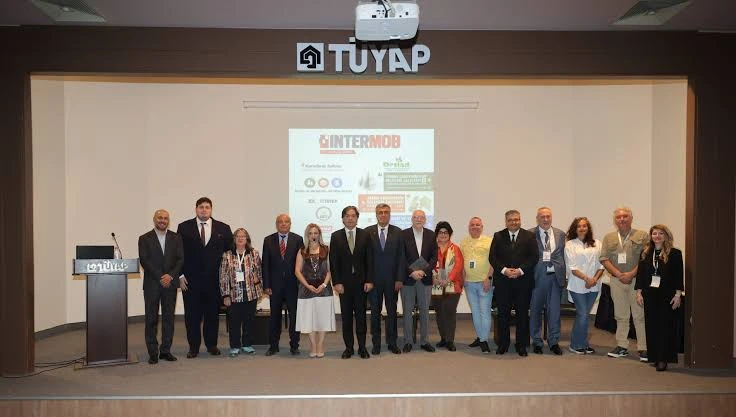
TÜRKİYE – Türkiye’s forest products industry examined raw material supply, recycling and packaging competitiveness at the Future of the Forest Products Industry Workshop 2026, highlighting a raw material deficit of 2.7 million cubic metres.
Tevfik Dedebaş of YOMSAD estimated that Türkiye’s wood-based panel, pallet and packaging, paper and construction industries collectively require around 32.5 million cubic metres of raw material.
According to figures presented at the workshop, combined supply sources leave an estimated deficit of approximately 2.7 million cubic metres, even as the industry operates at around 80 to 85 percent capacity utilisation.
Cost emerged as a more immediate concern, with Dedebaş highlighting the gap between Türkiye’s wood prices and those of competing markets and arguing that high raw material costs were placing pressure on manufacturers and exporters serving packaging customers.
Recycling Positioned as Core Opportunity for Packaging Grades
Recycling emerged as one of the clearest opportunities for the sector.
Dedebaş called for greater use of recycled wood, particularly in particleboard production, while Naci Güngör of Alim Group argued that raw material should increasingly be sourced from cities as well as forests.
Güngör proposed joint collection centres involving industry, the General Directorate of Forestry and universities, alongside furniture take-back systems.
For packaging producers, expanded recycled fibre availability could reduce exposure to virgin wood price volatility while supporting customer demand for recovered content.
Certification and Traceability Shape European Market Access
Fatma Taycı of FSC Türkiye highlighted the growing importance of certification and traceability as European climate and sourcing requirements evolve.
Approximately 14 million hectares of forest in Türkiye are FSC certified, alongside more than 1,000 certified companies.
The European Union Deforestation Regulation was also discussed, with Taycı noting that Turkish companies supplying European markets would increasingly need to provide sourcing information to customers.
While FSC certification covers several requirements overlapping with EUDR, she stressed that certification did not automatically constitute compliance, making stronger supply chain data essential for packaging exporters.
Value-Added and Structural Timber Applications Expand
Bülent Güneş of the General Directorate of Forestry said approximately 49 percent of OGM sales revenue is allocated directly to production costs, noting that forestry operations carry structural expenses.
Dr Demet Sürücü of Bahçeşehir University argued that timber can be transformed into higher-value structural products including glued laminated timber and cross-laminated timber, and that forestry, recycling, material efficiency, design and construction should be treated as one value chain.
Türkiye has approximately 23.4 million hectares of forest, with annual growth estimated at around 51 million cubic metres, of which about 34 million cubic metres is currently included in production.
Subscribe to our email newsletters that provide busy executives like you with the latest news insights and trends from Africa and the World. SUBSCRIBE HERE

Be the first to leave a comment